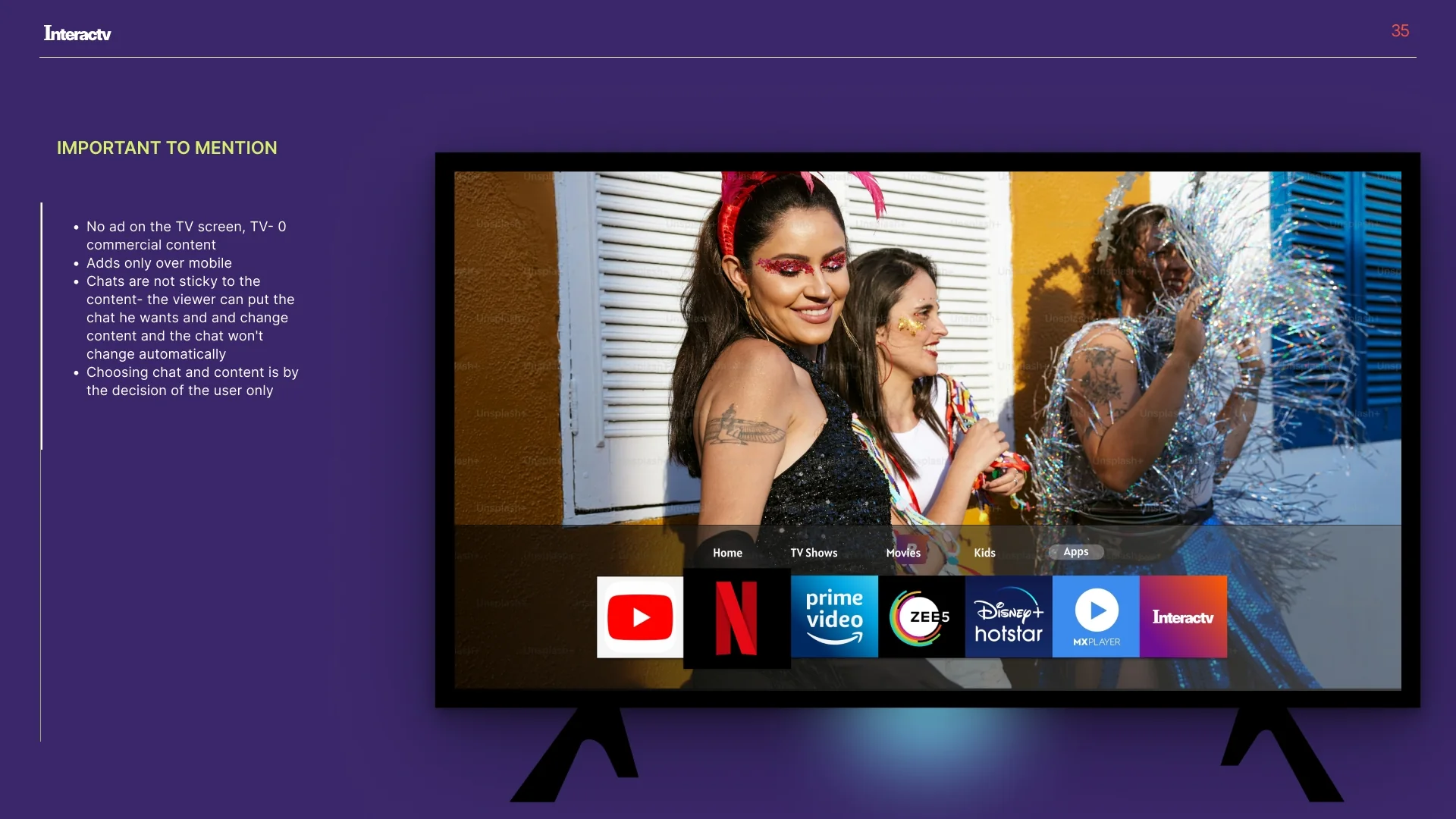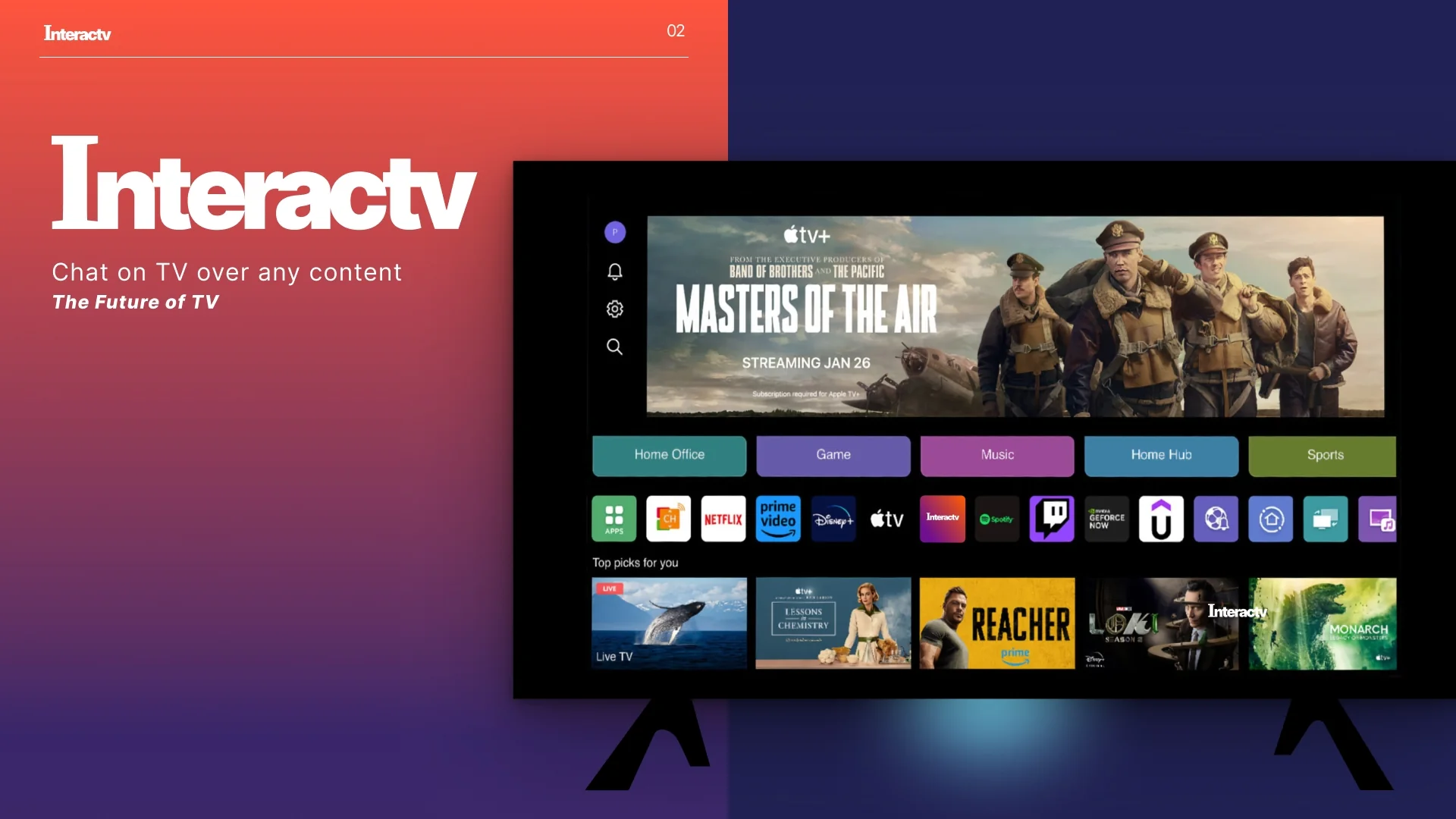
InteracTV explores what happens when second-screen behaviour becomes part of the product instead of a distraction from it. The TV stays the main viewing surface; the phone becomes the lightweight control, participation and discovery layer.
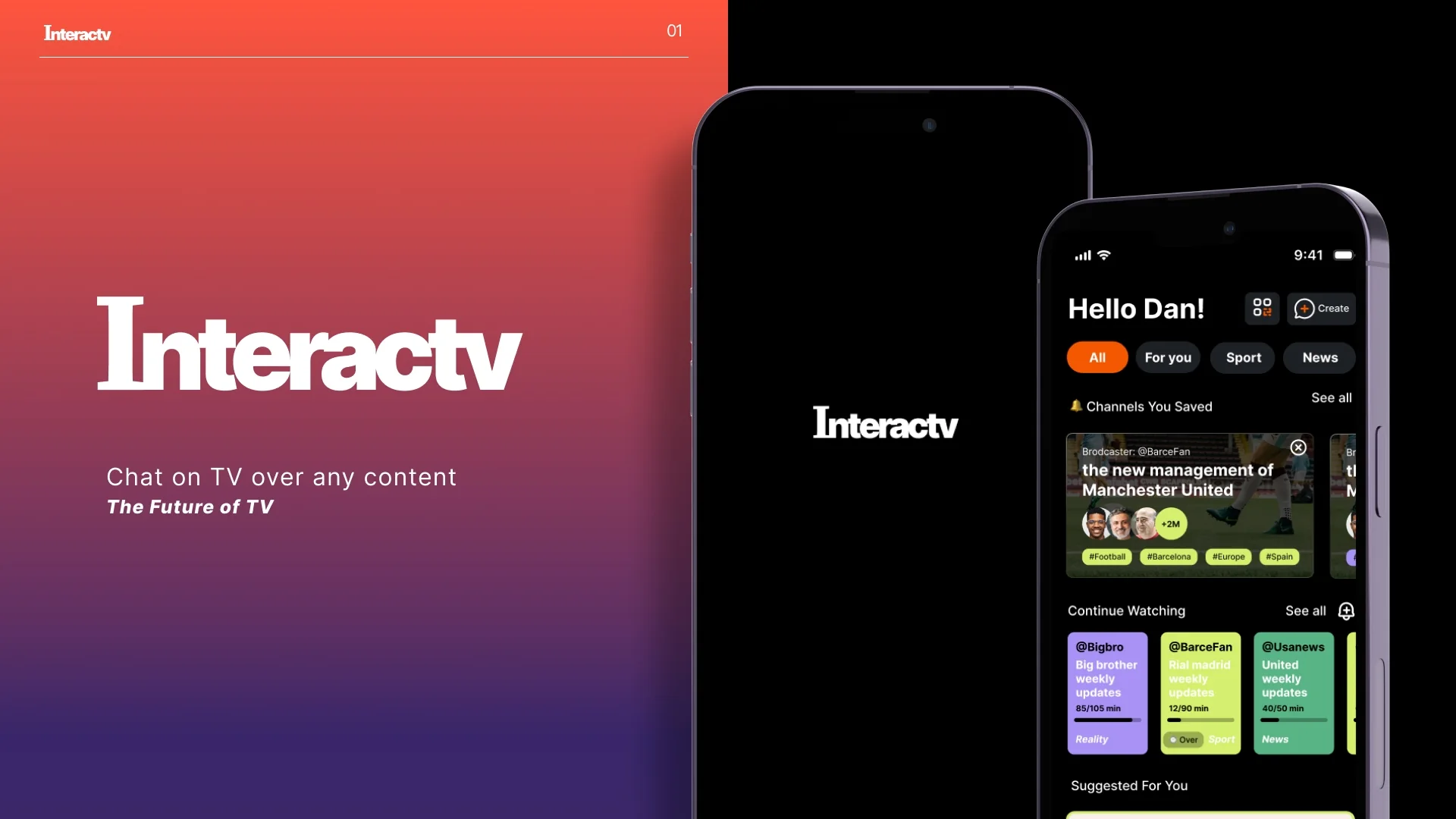
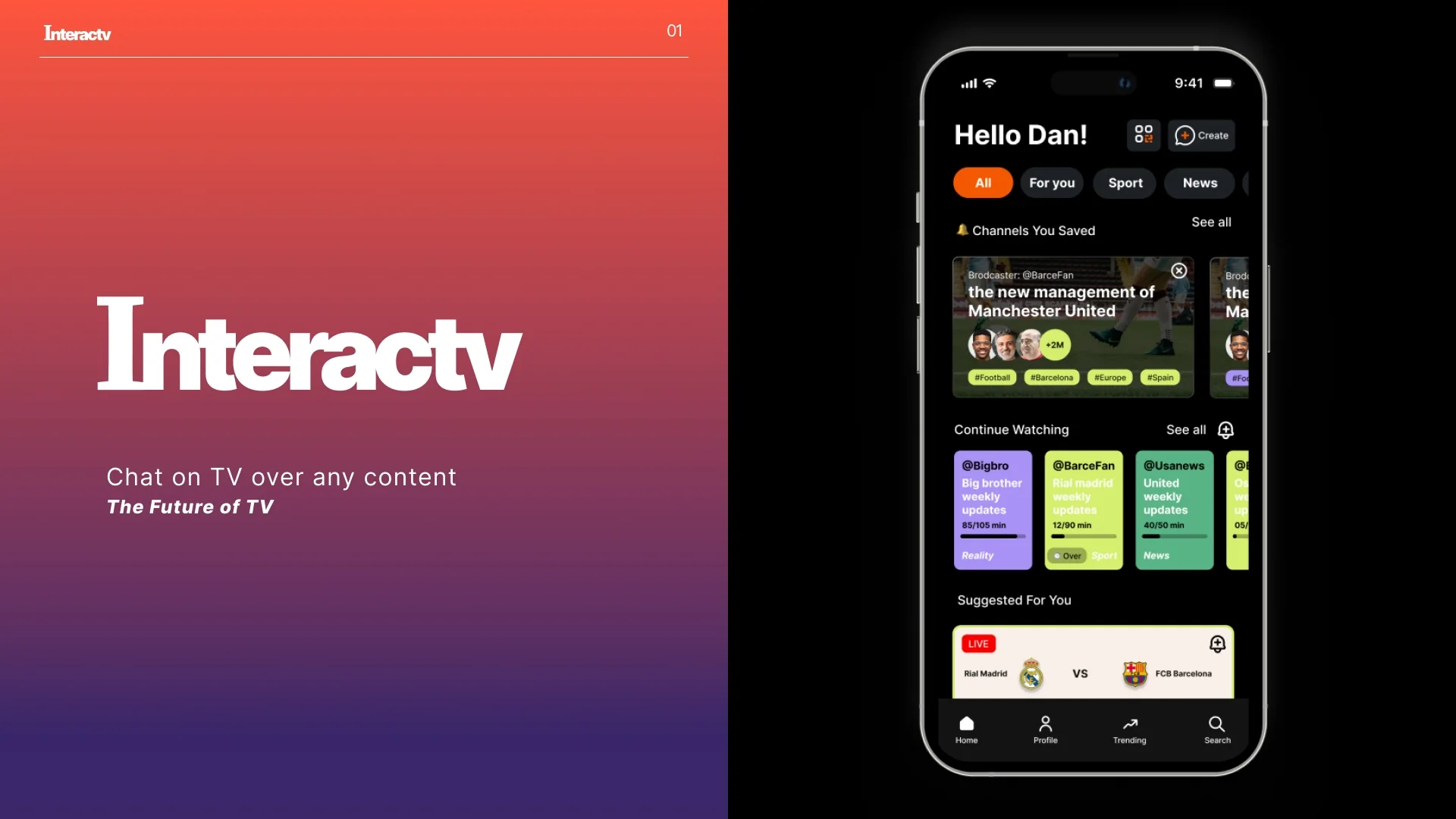
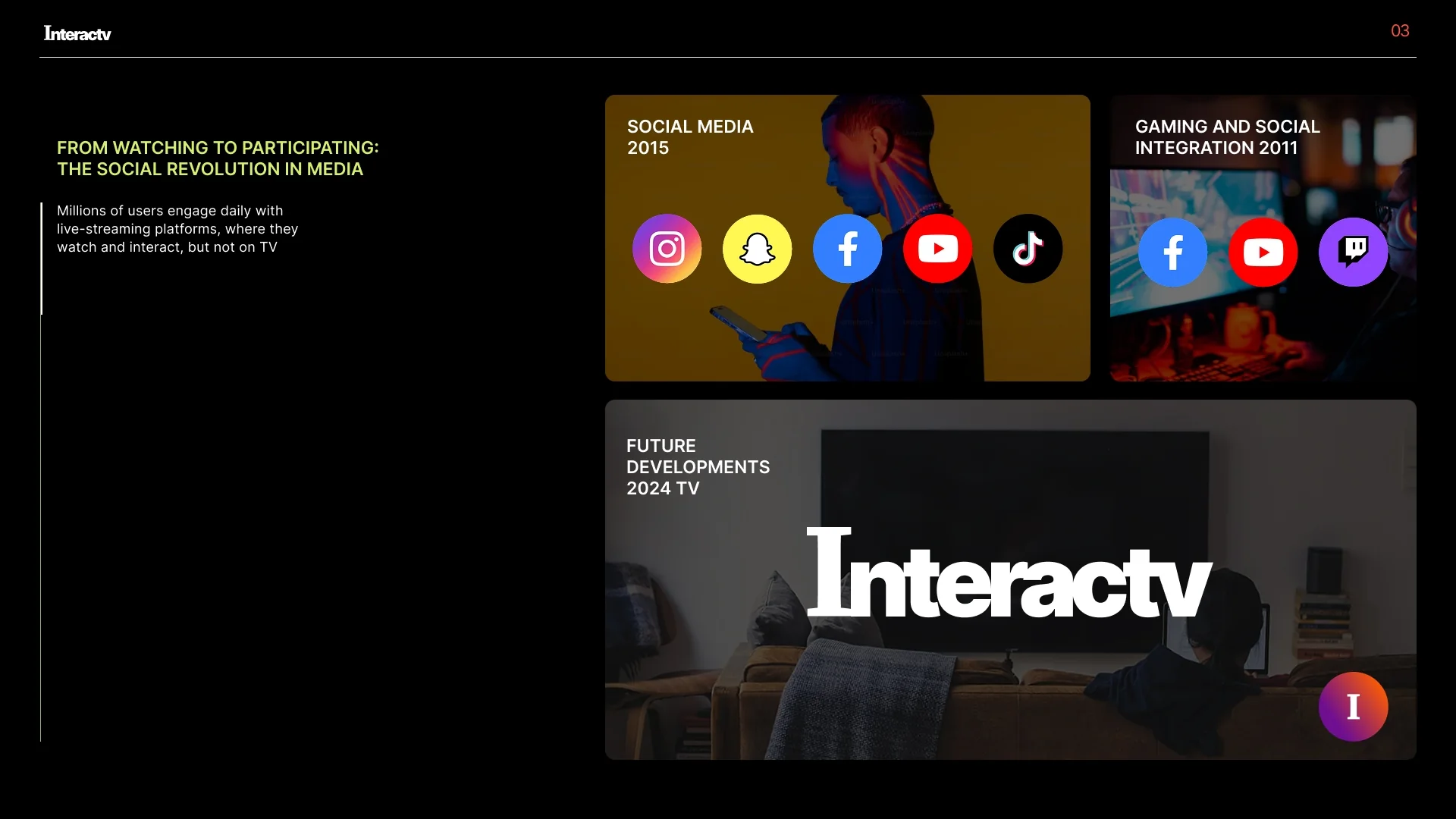
From passive watching to participation. The product direction was built around a simple constraint: add presence, chat and reaction without covering the content people came to watch.

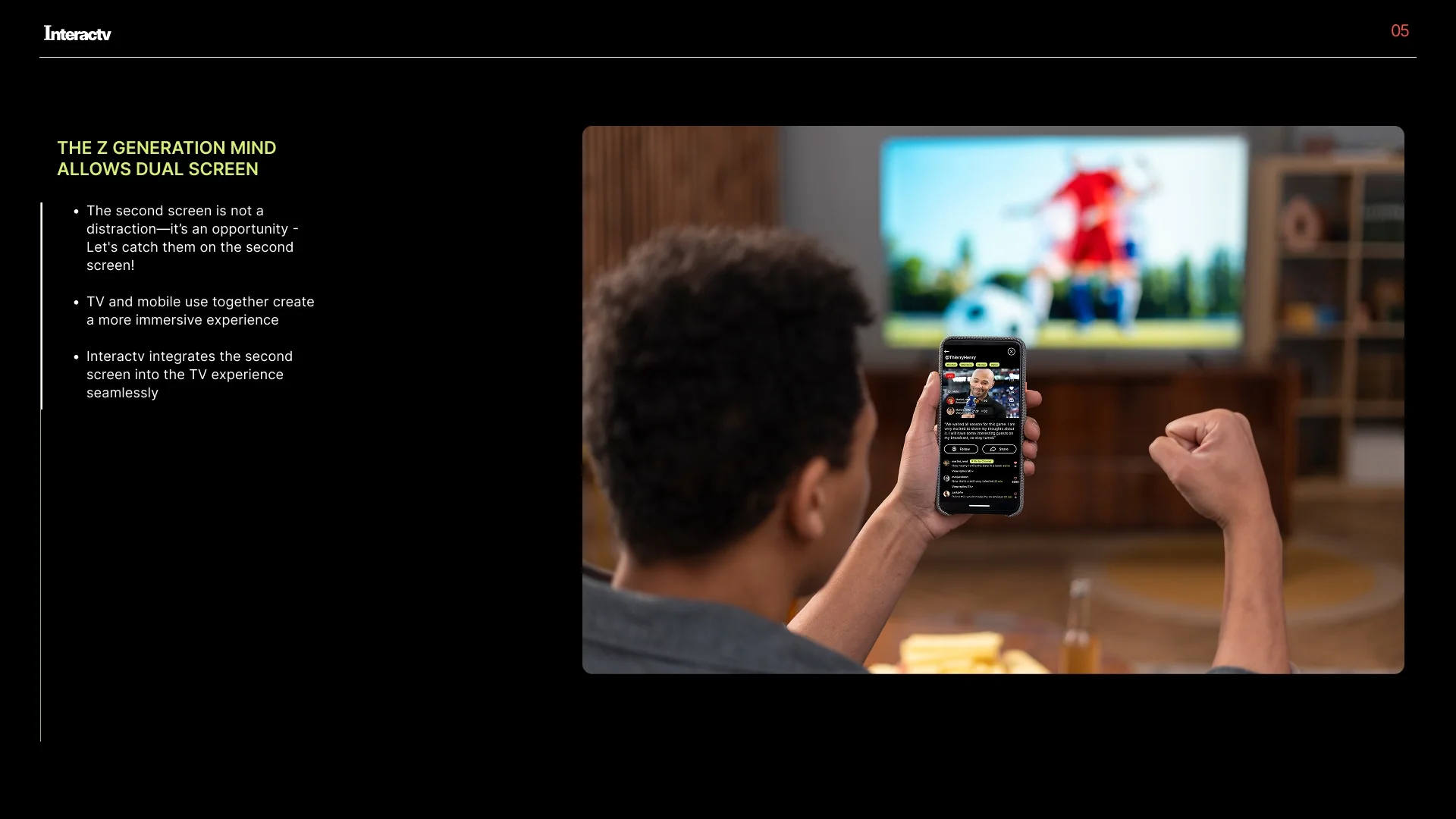

Pair once, then let each screen do what it is good at. The TV carries the shared moment. The phone handles identity, typing, search and lightweight controls. Pairing keeps the two surfaces synchronised without turning the television into a giant phone UI.
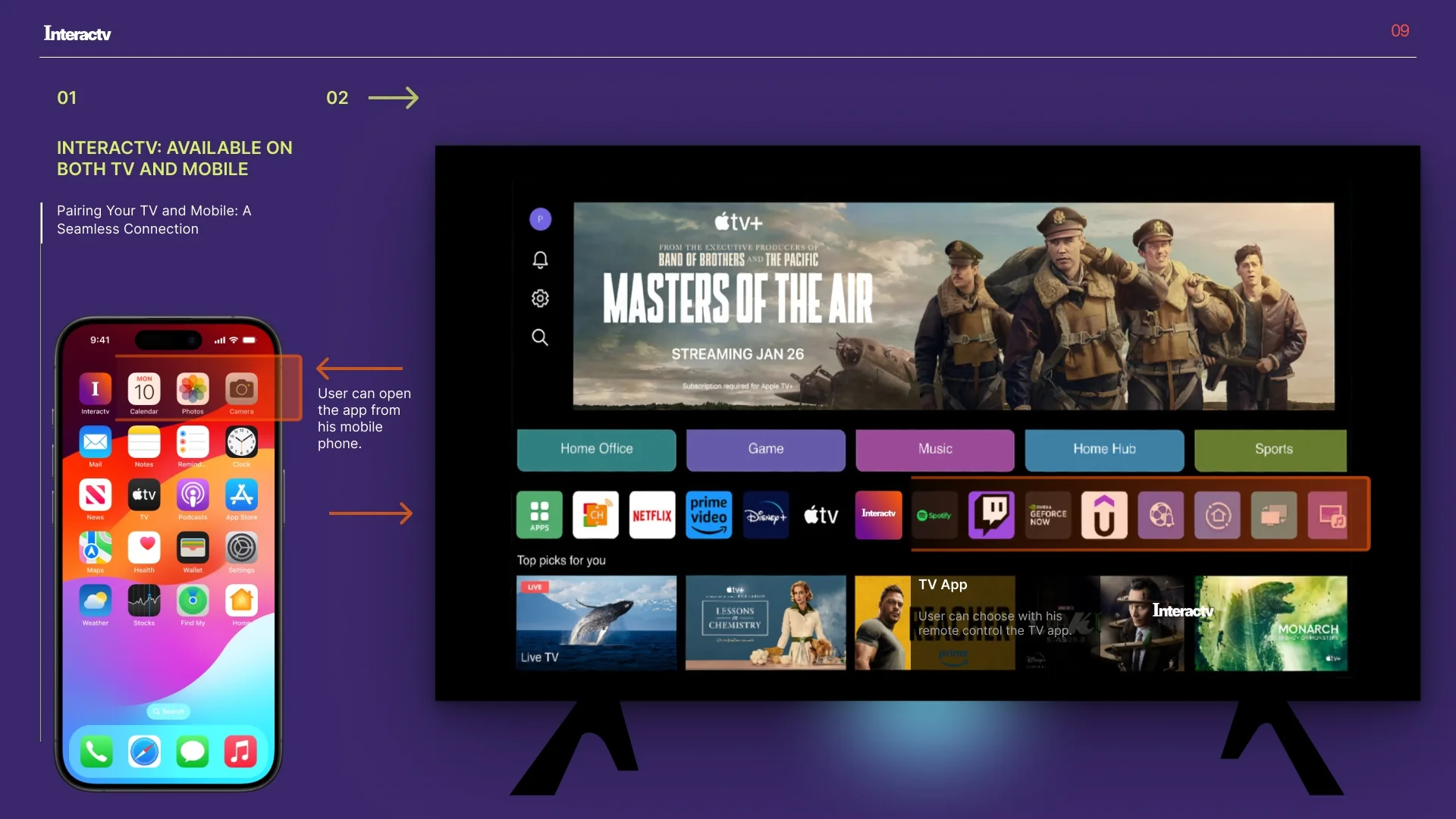
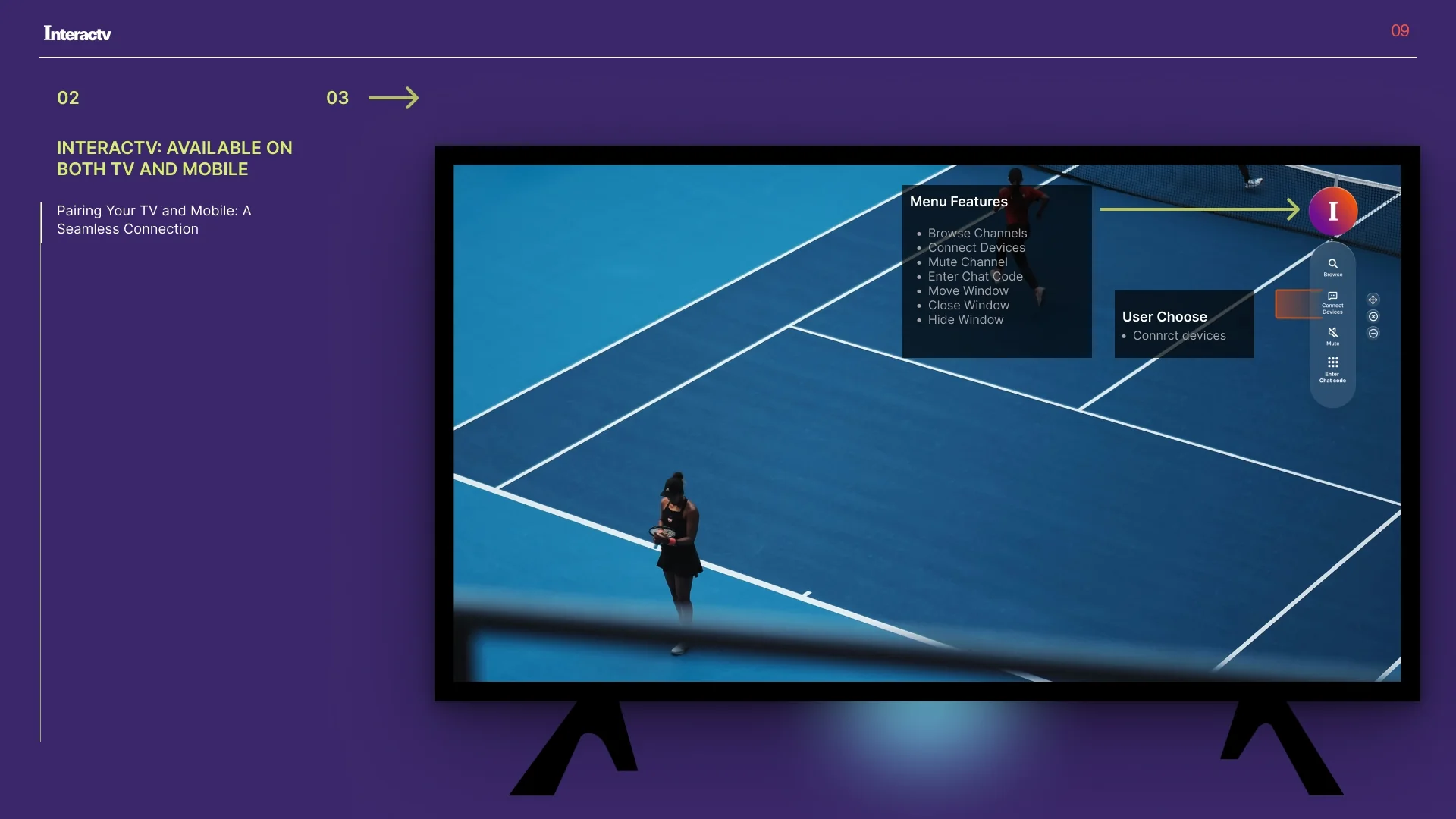
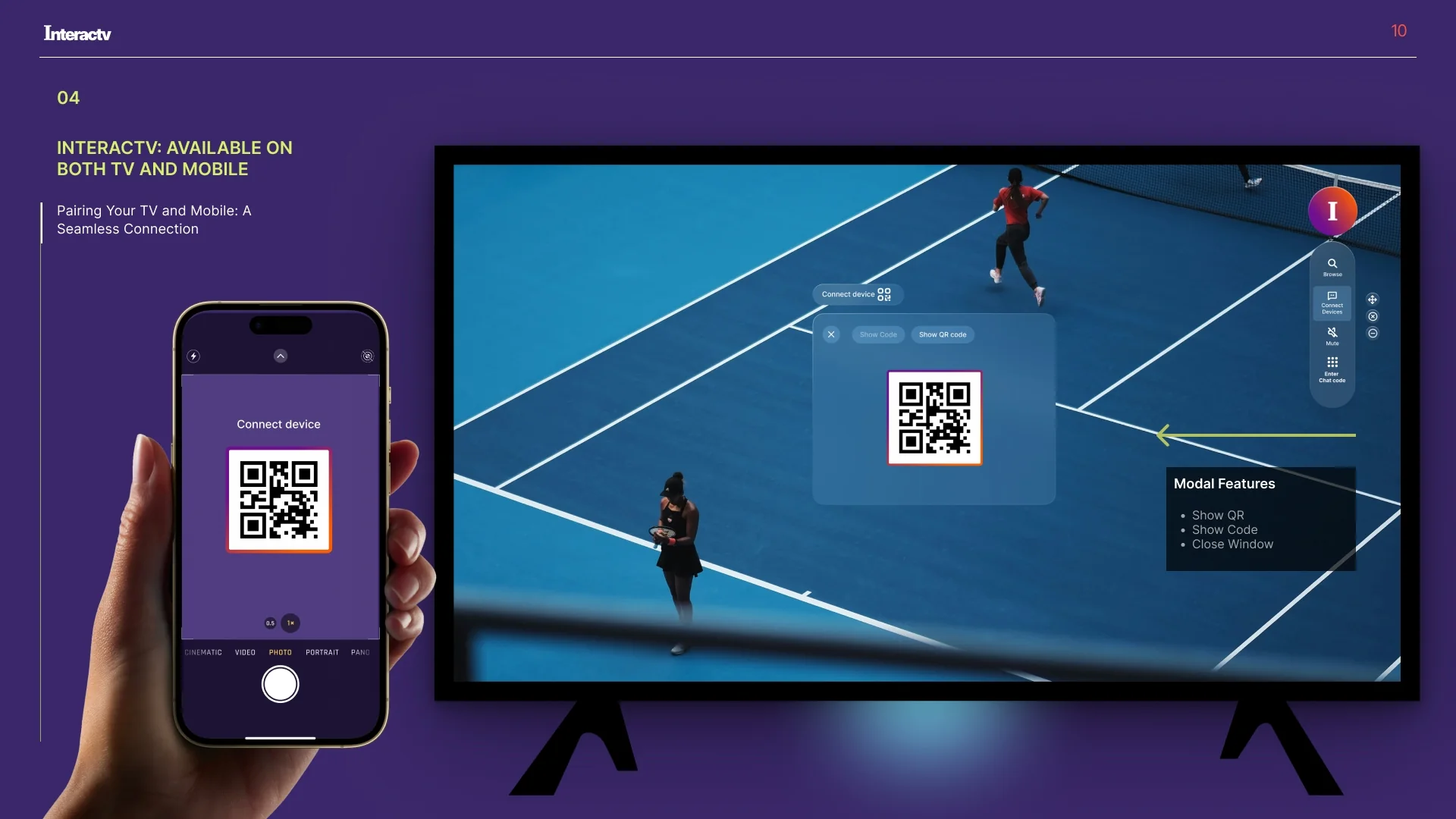

The content stays first; interaction sits around it. I explored multiple ways to surface live discussion, calls, reactions and contextual controls while preserving a clear visual hierarchy around the programme.
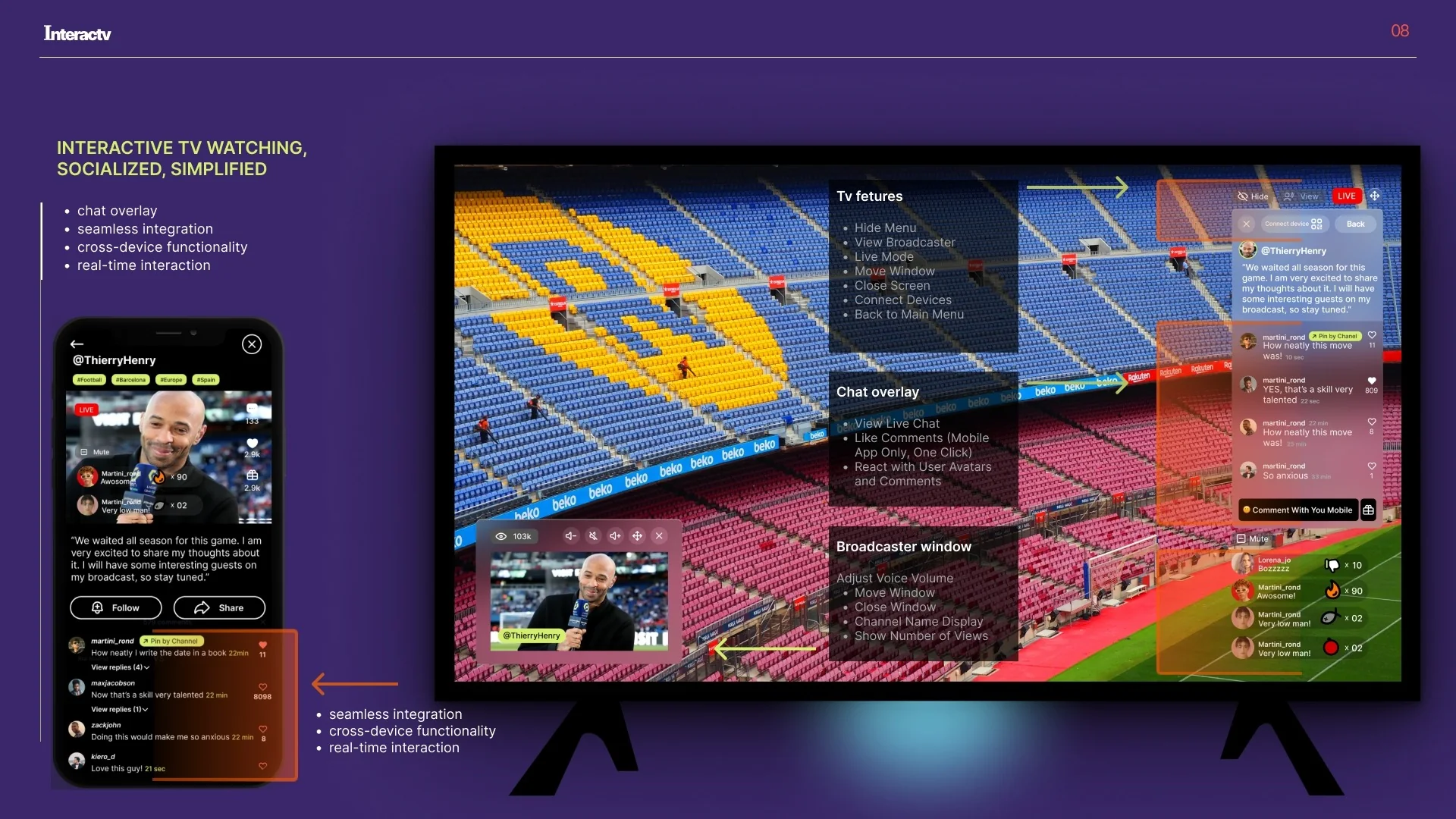
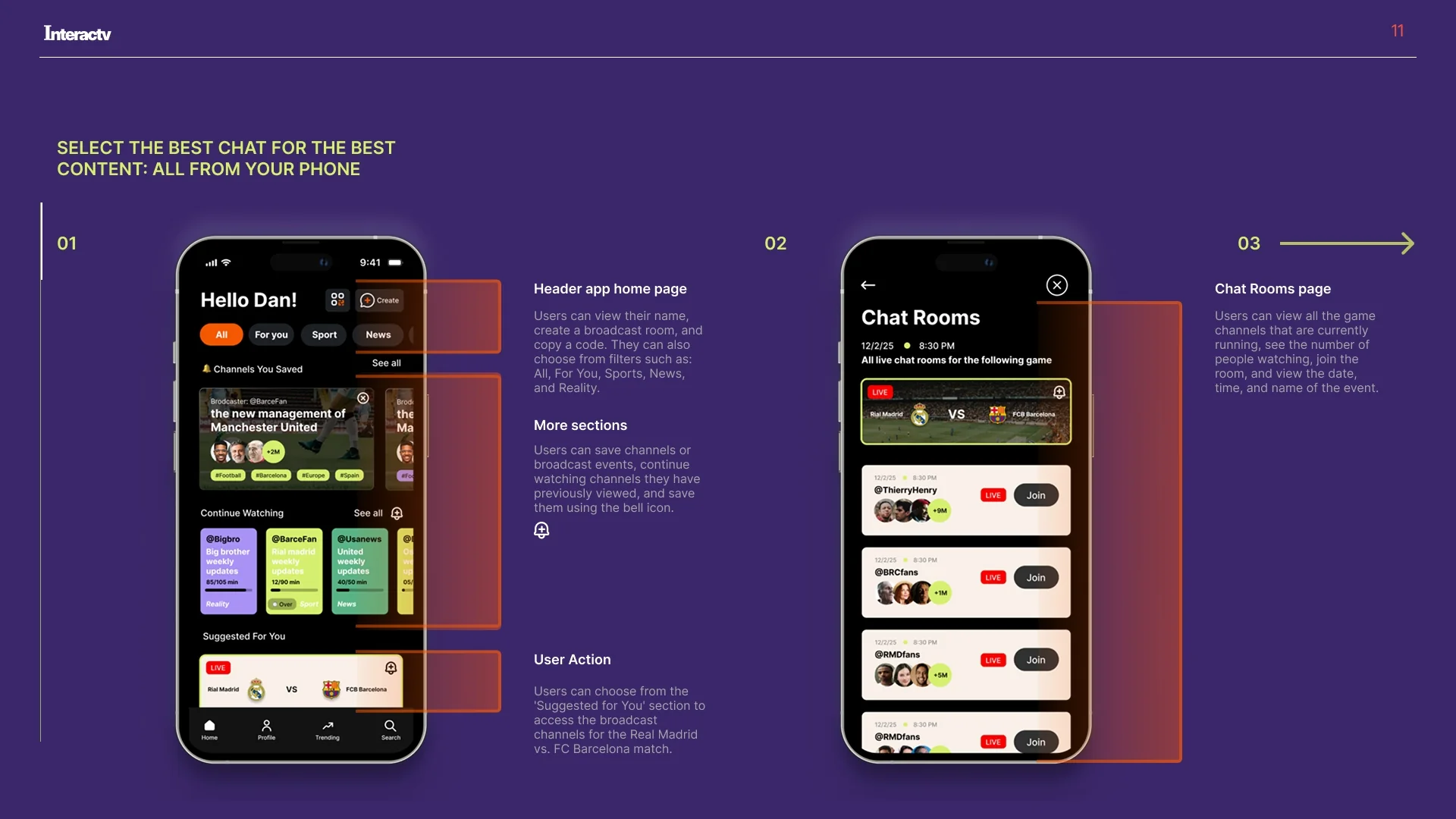
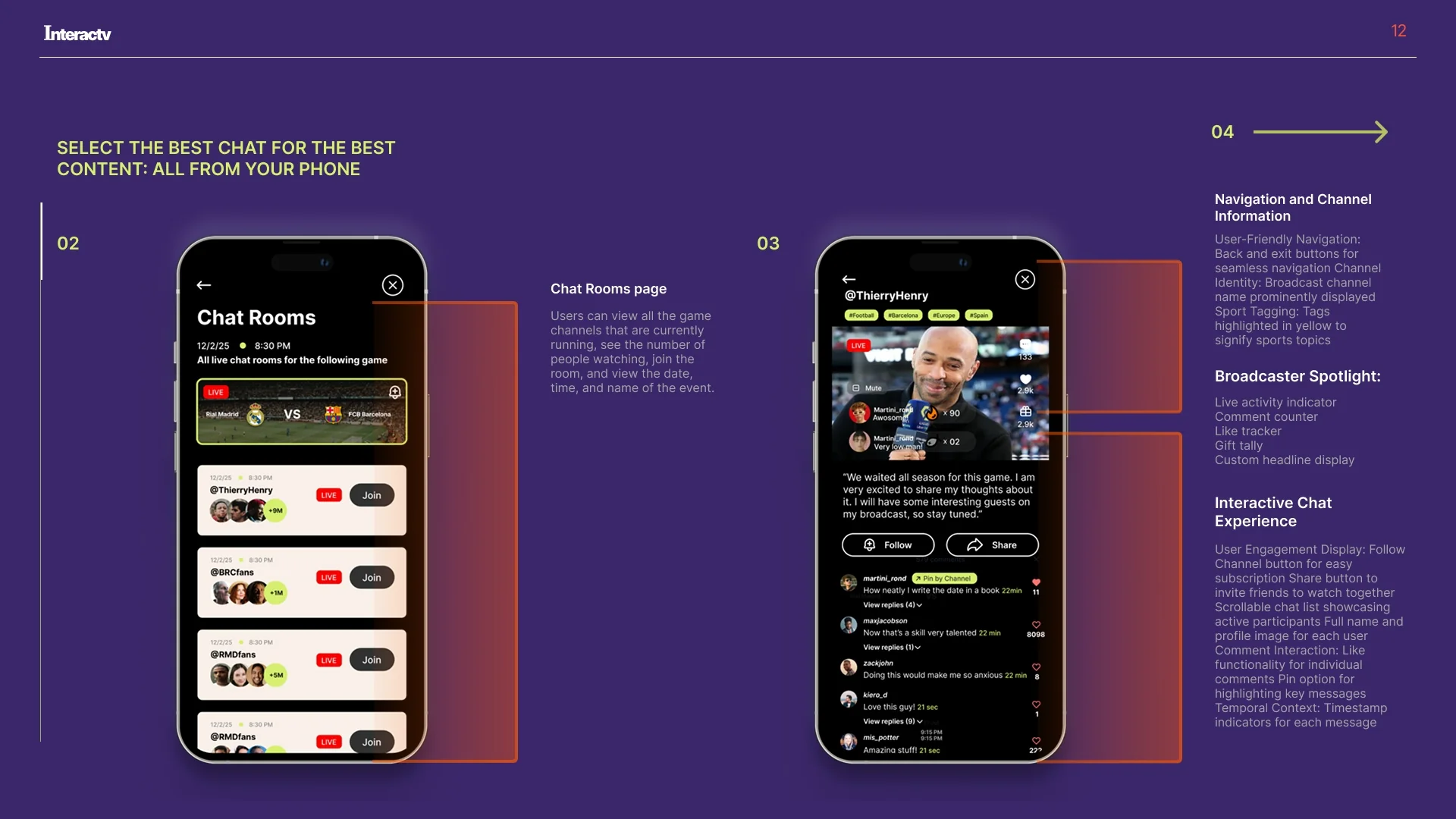
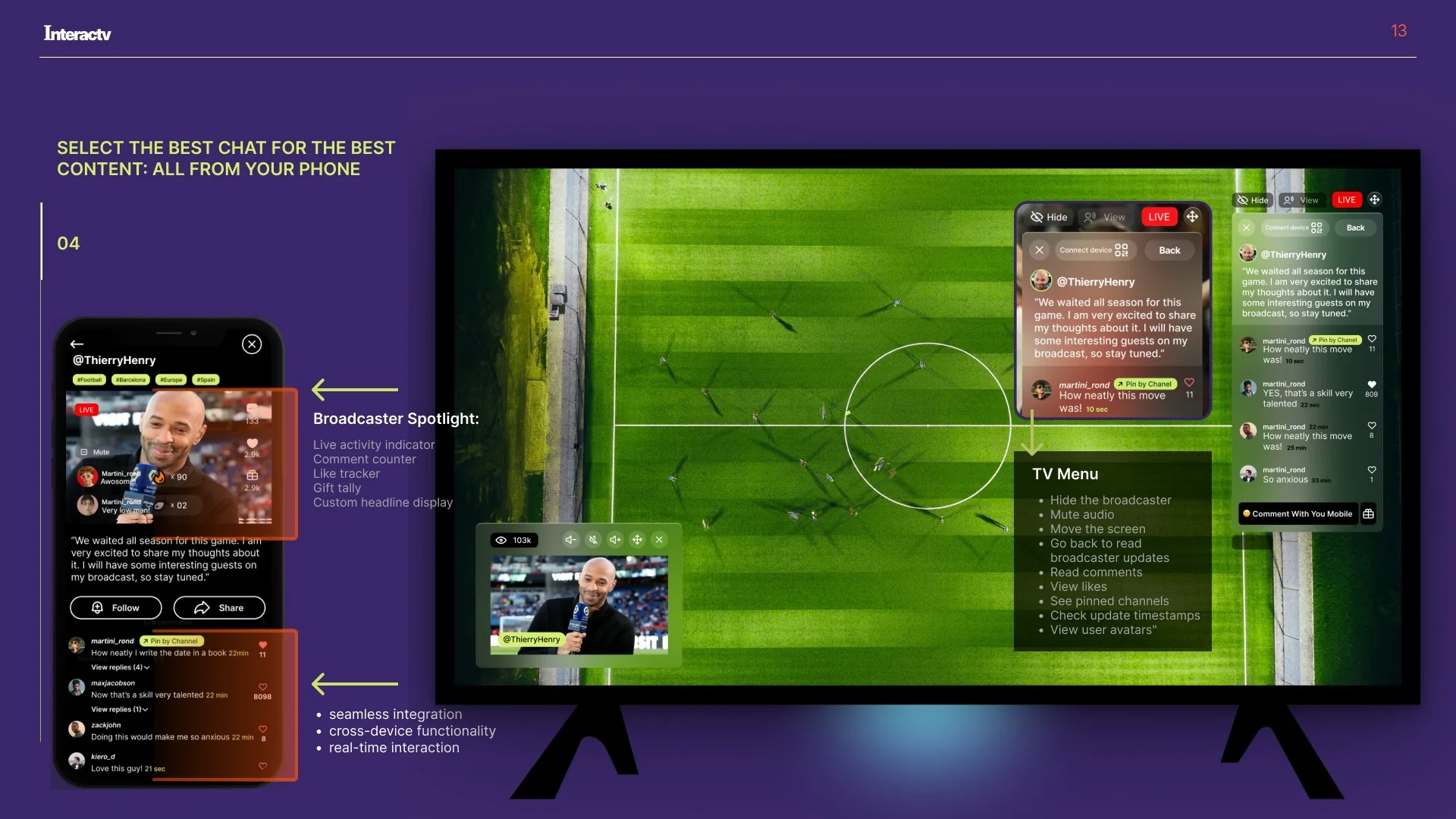
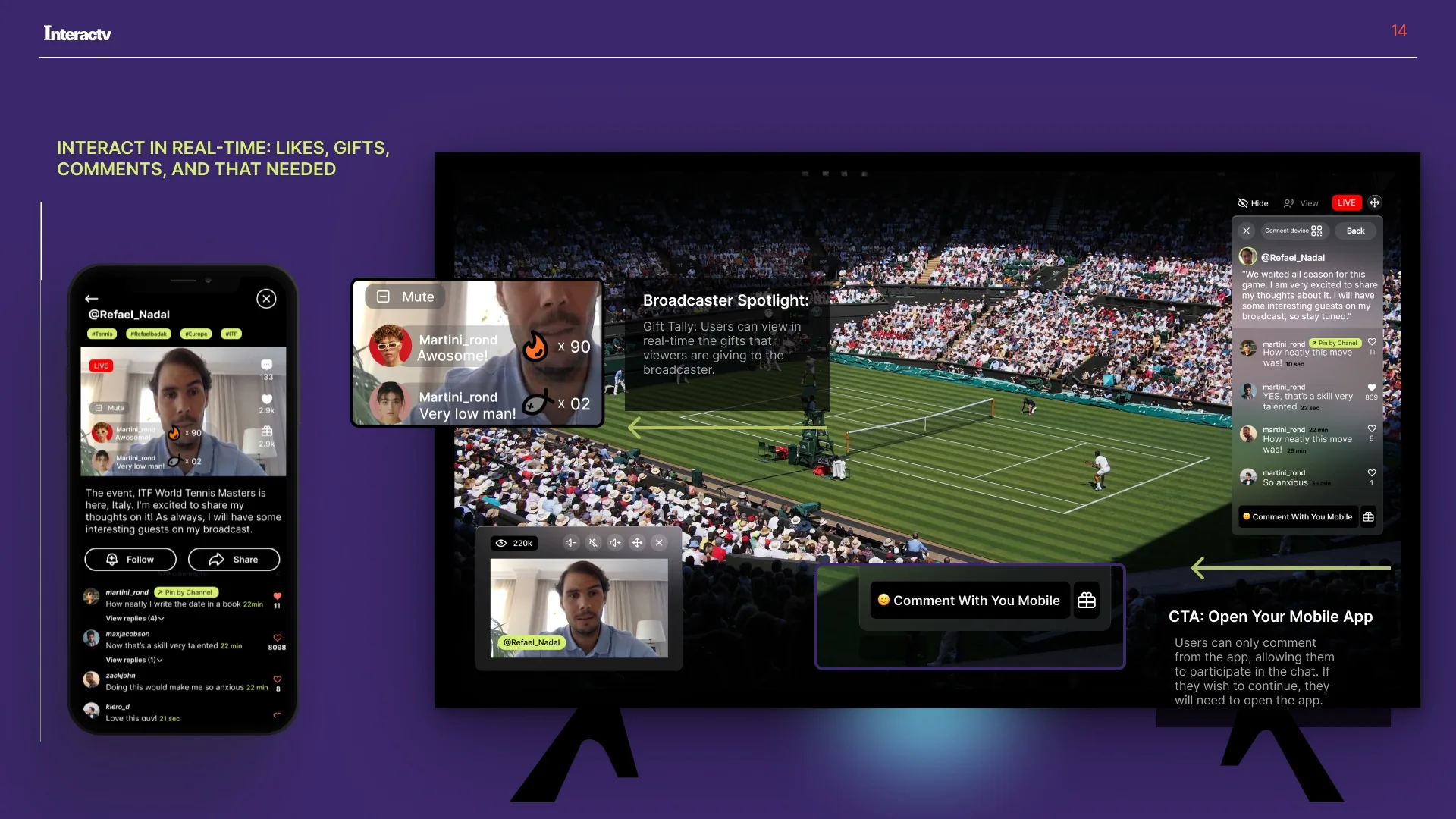
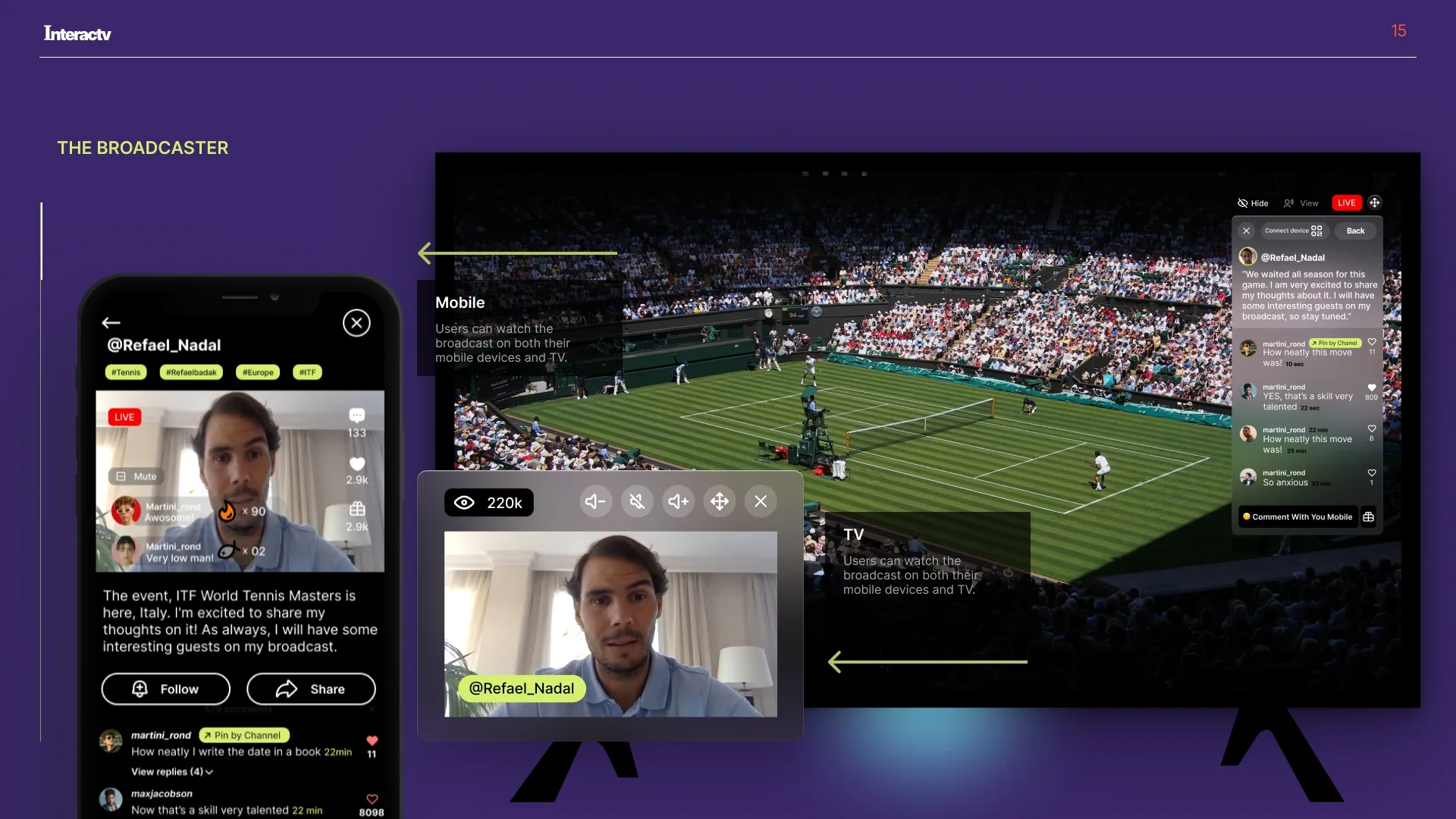
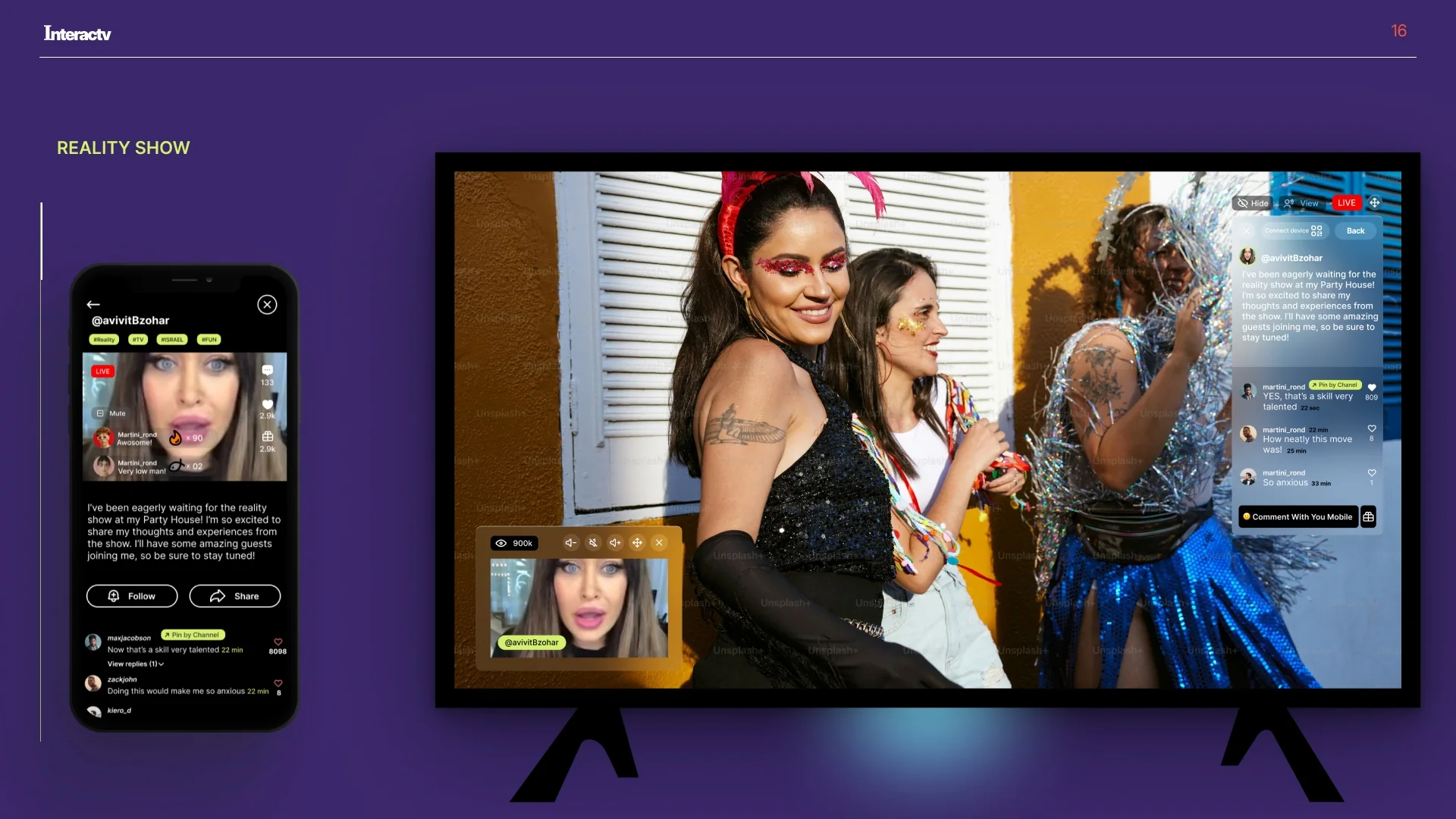
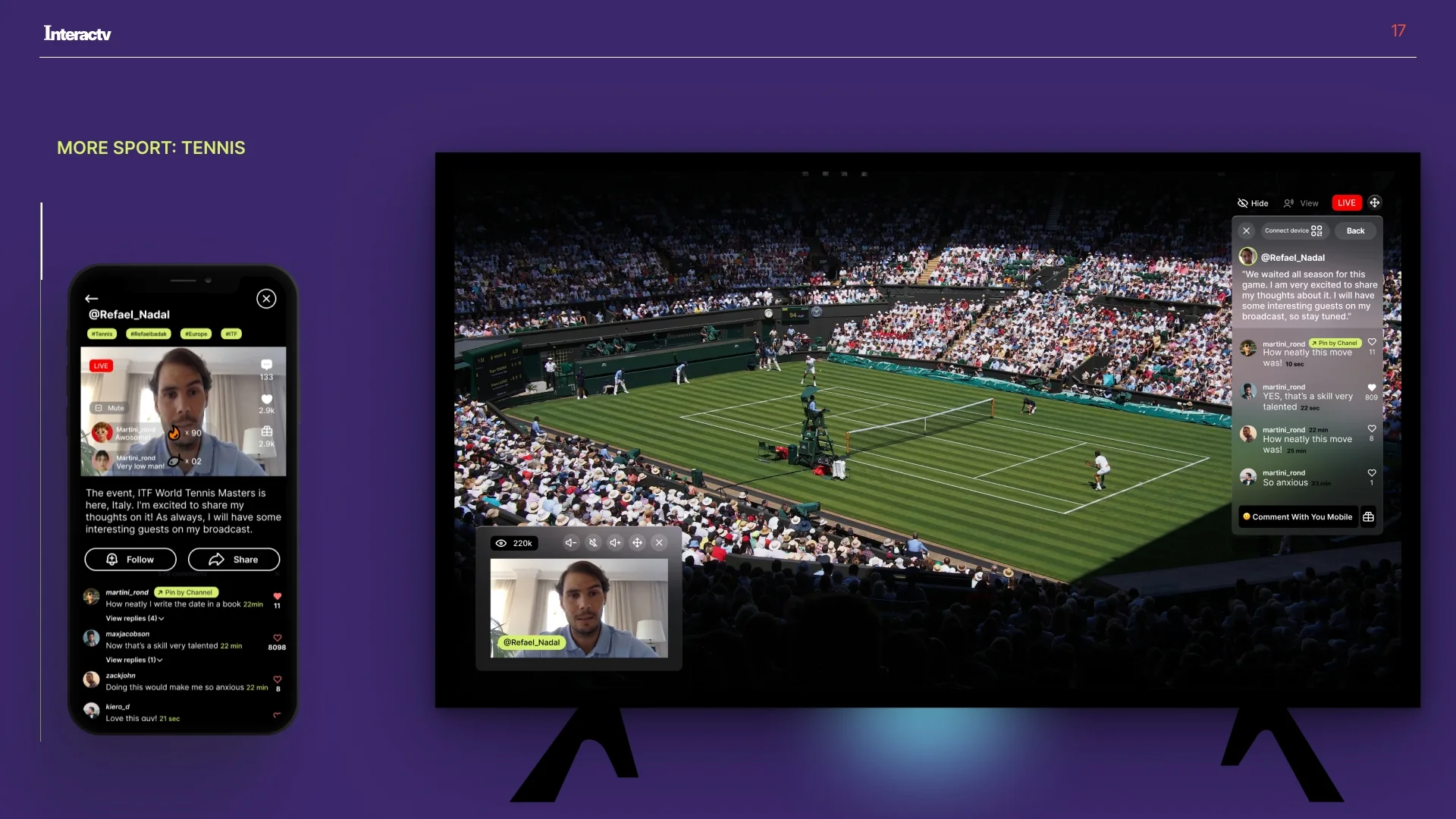
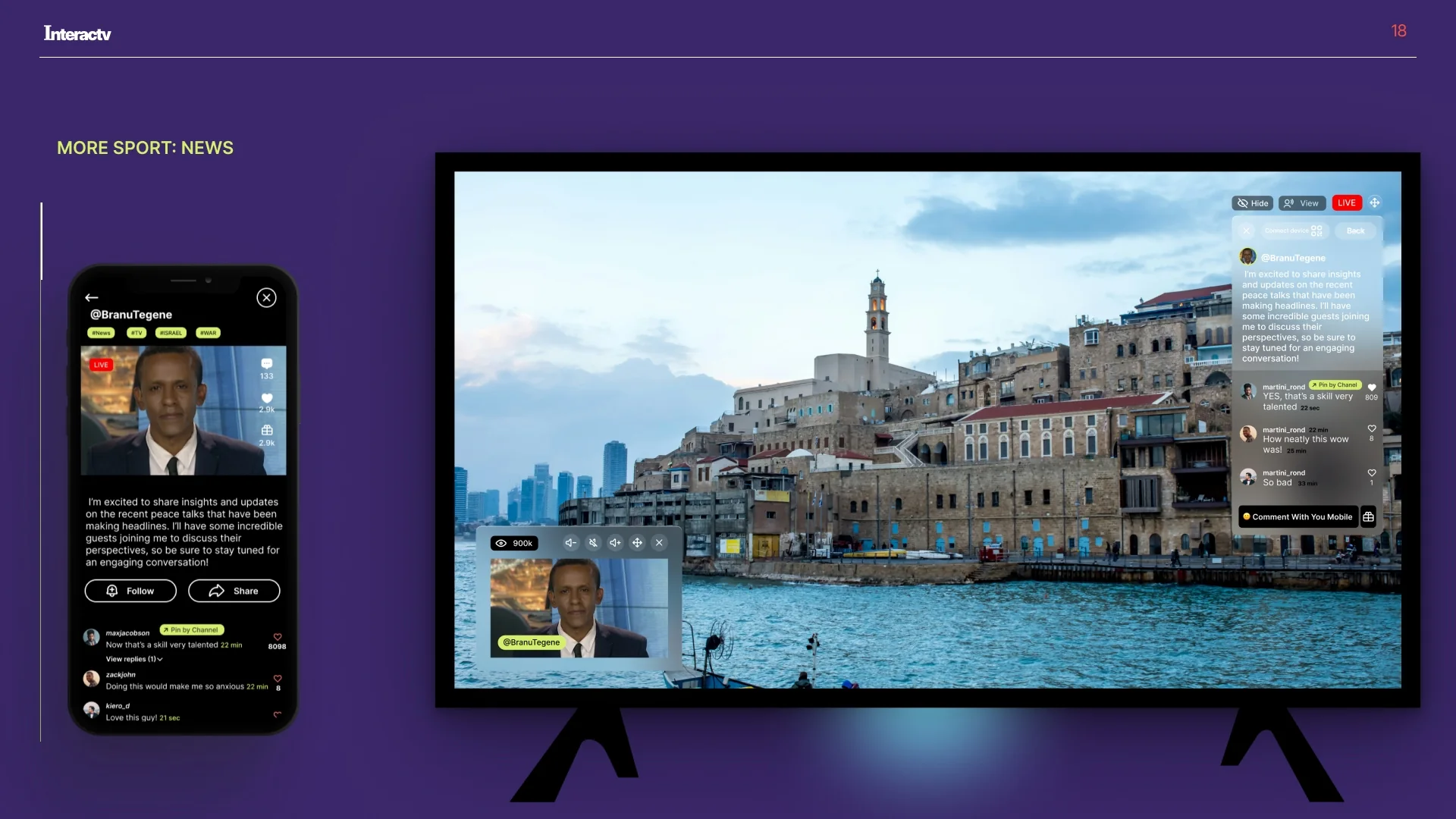
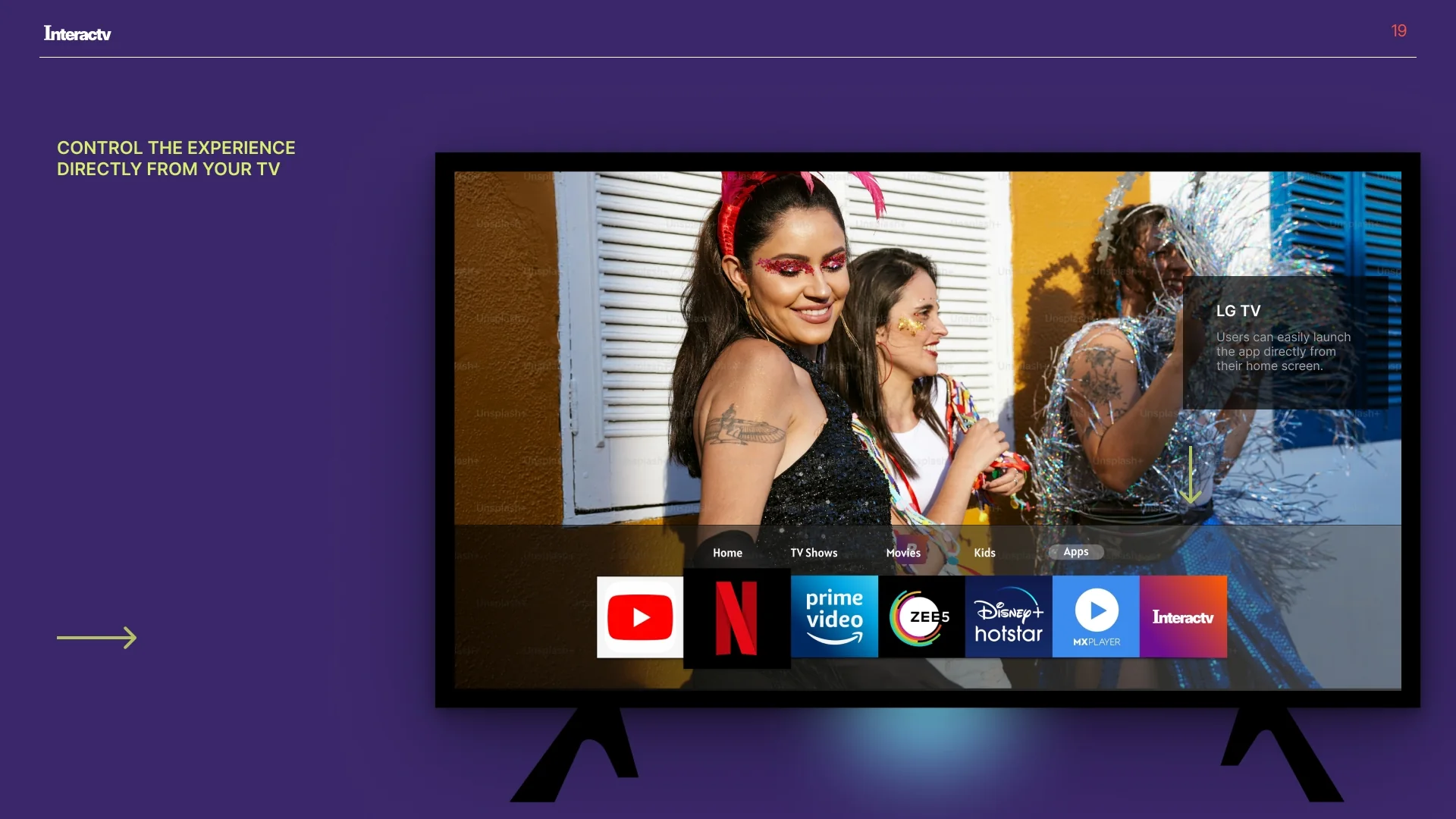
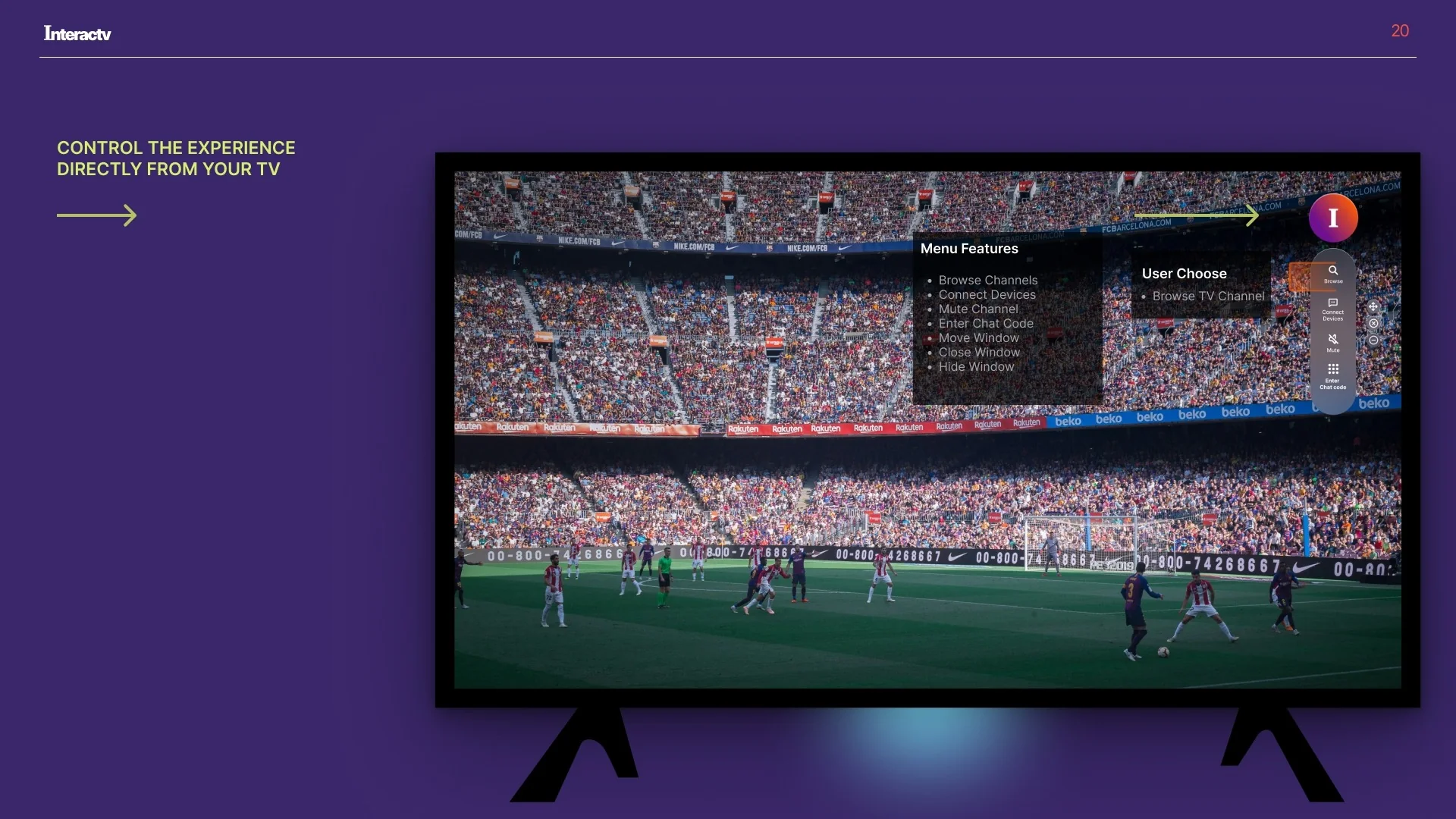
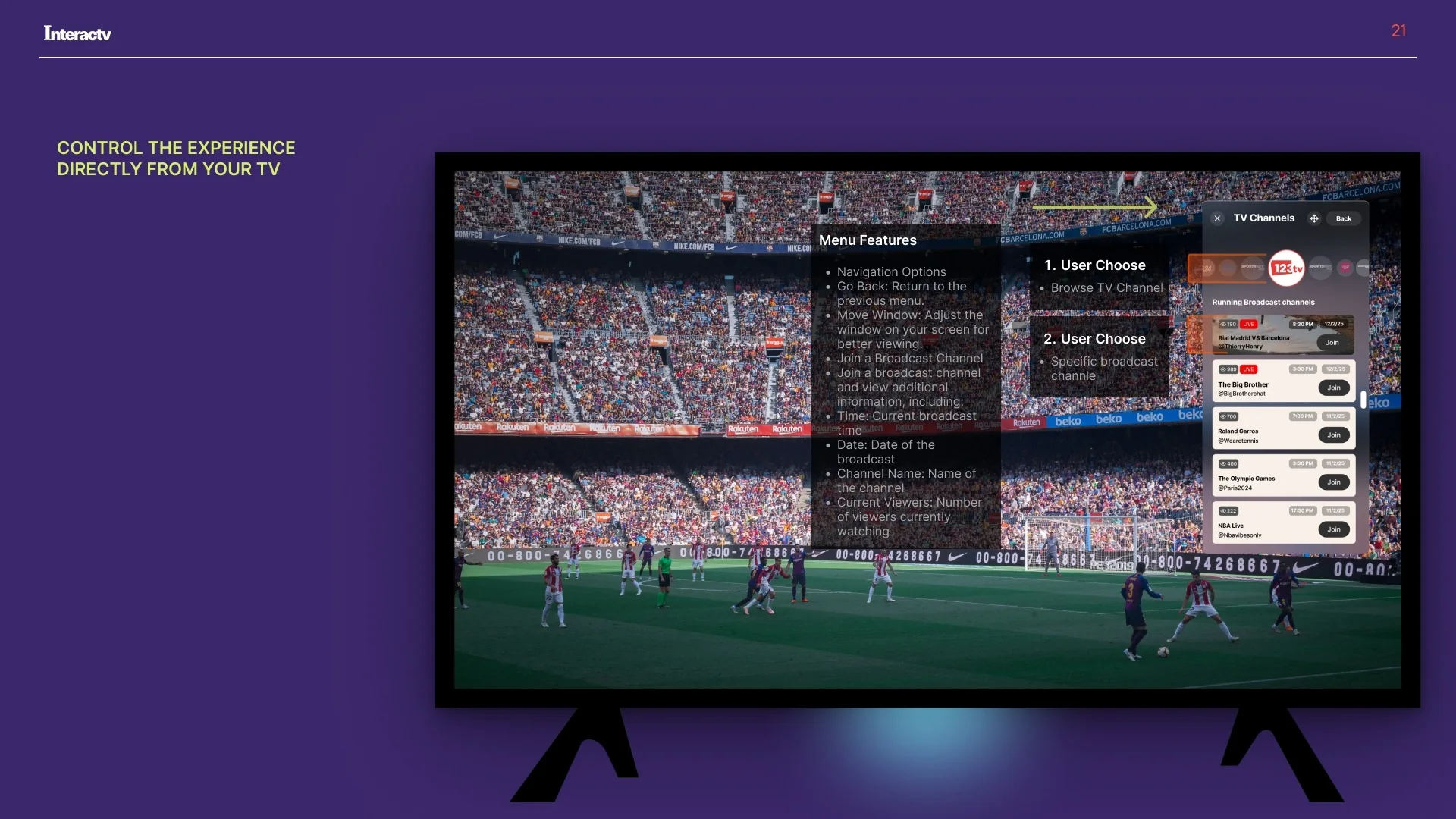
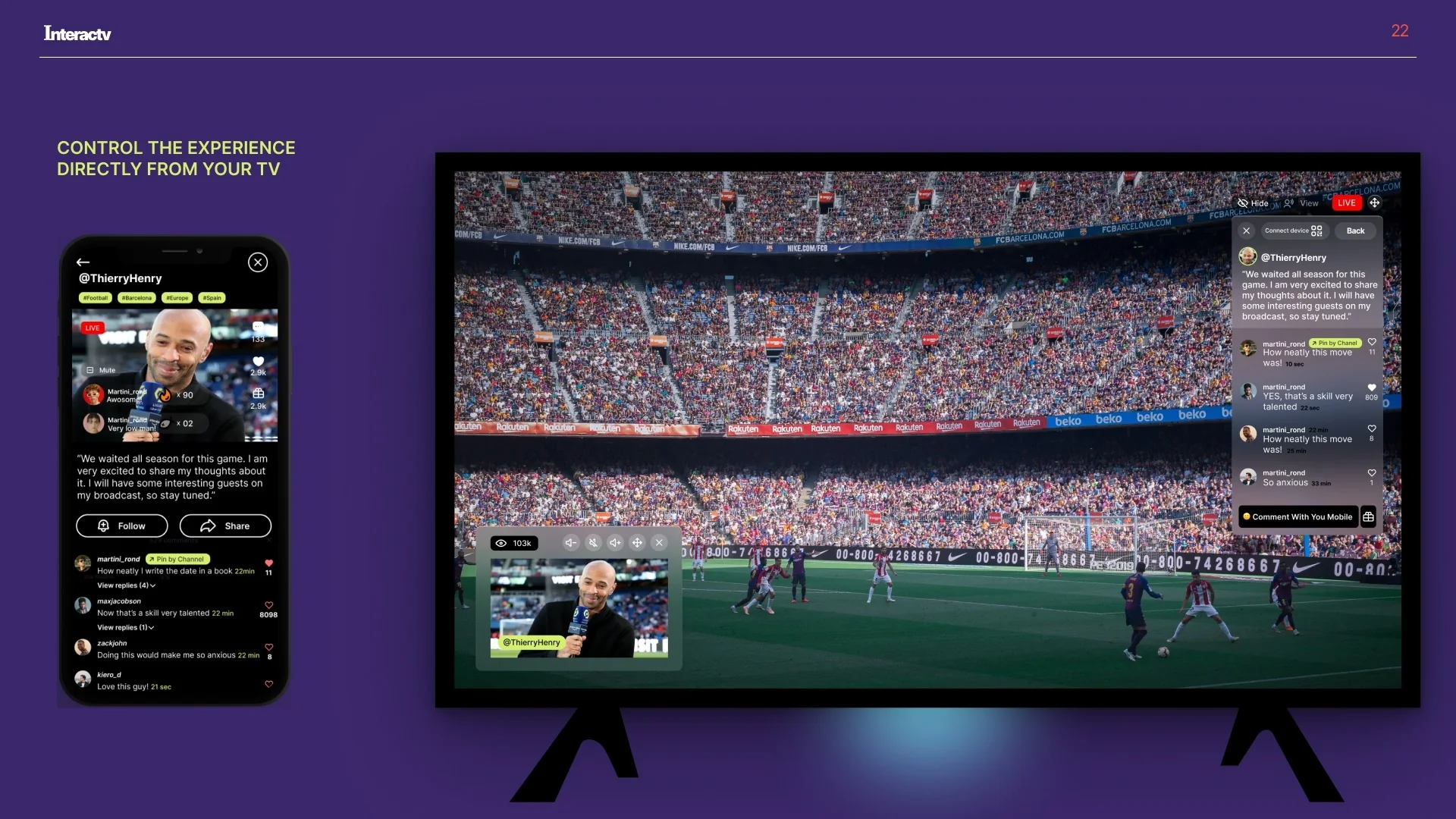
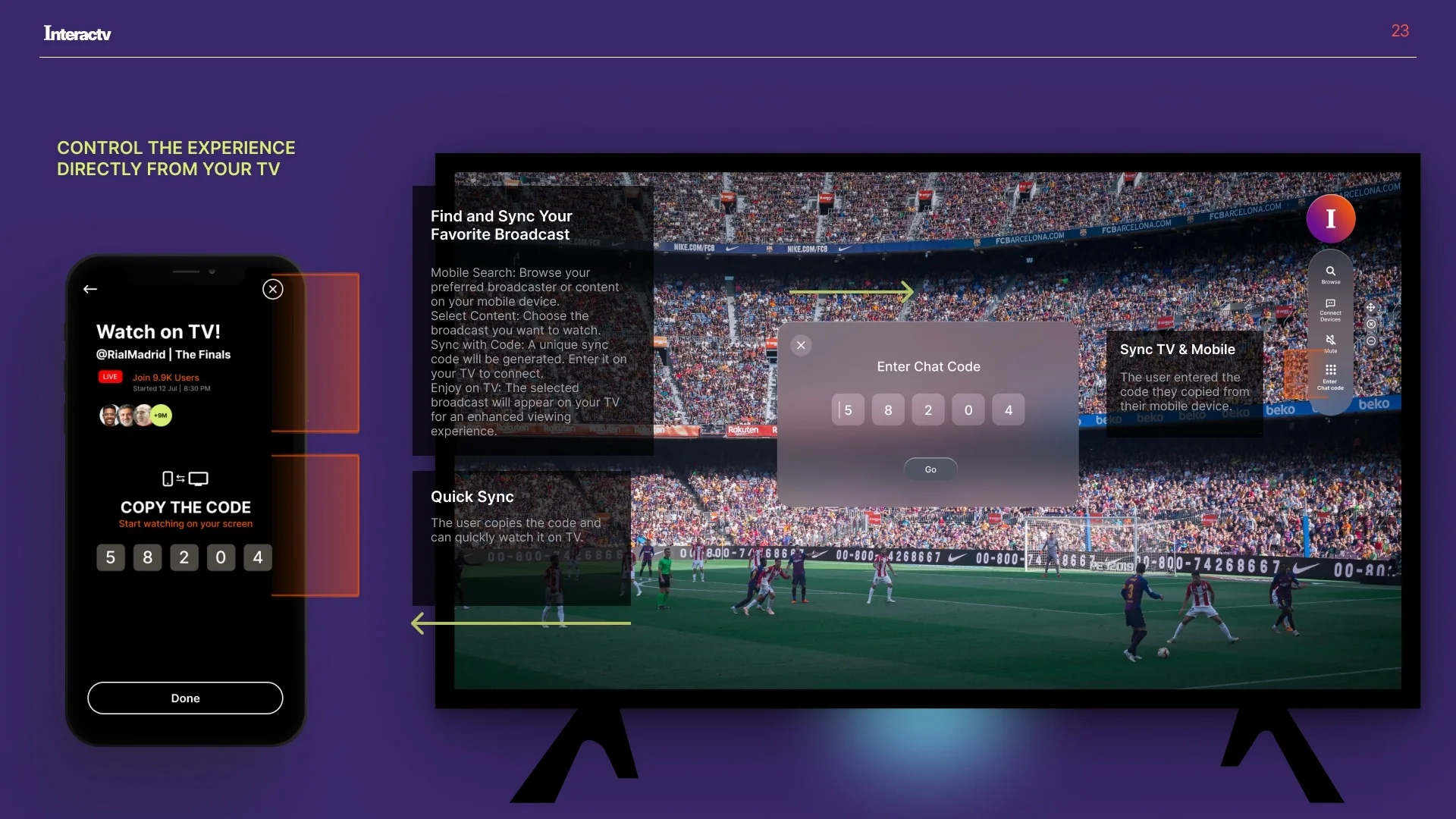
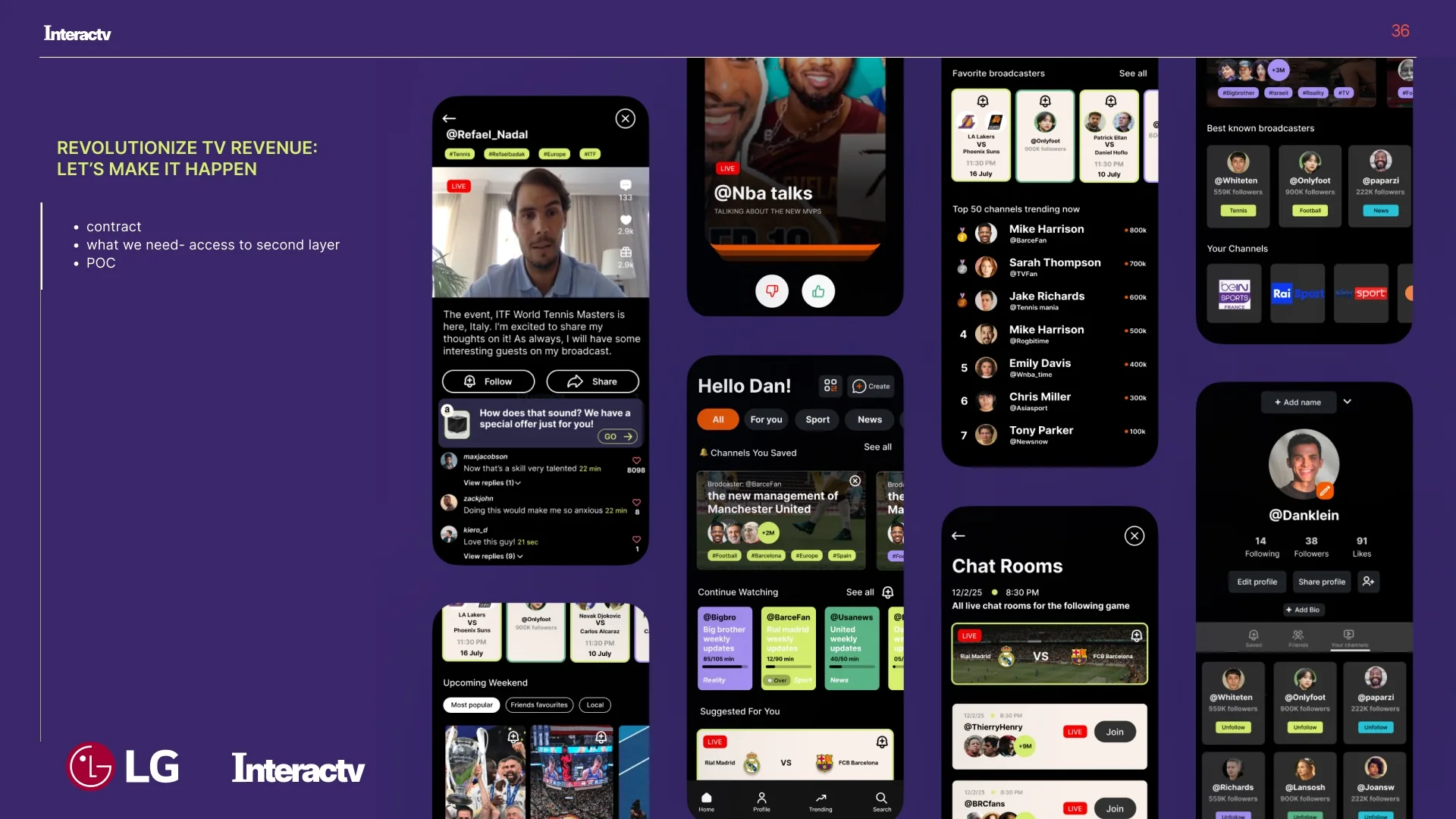
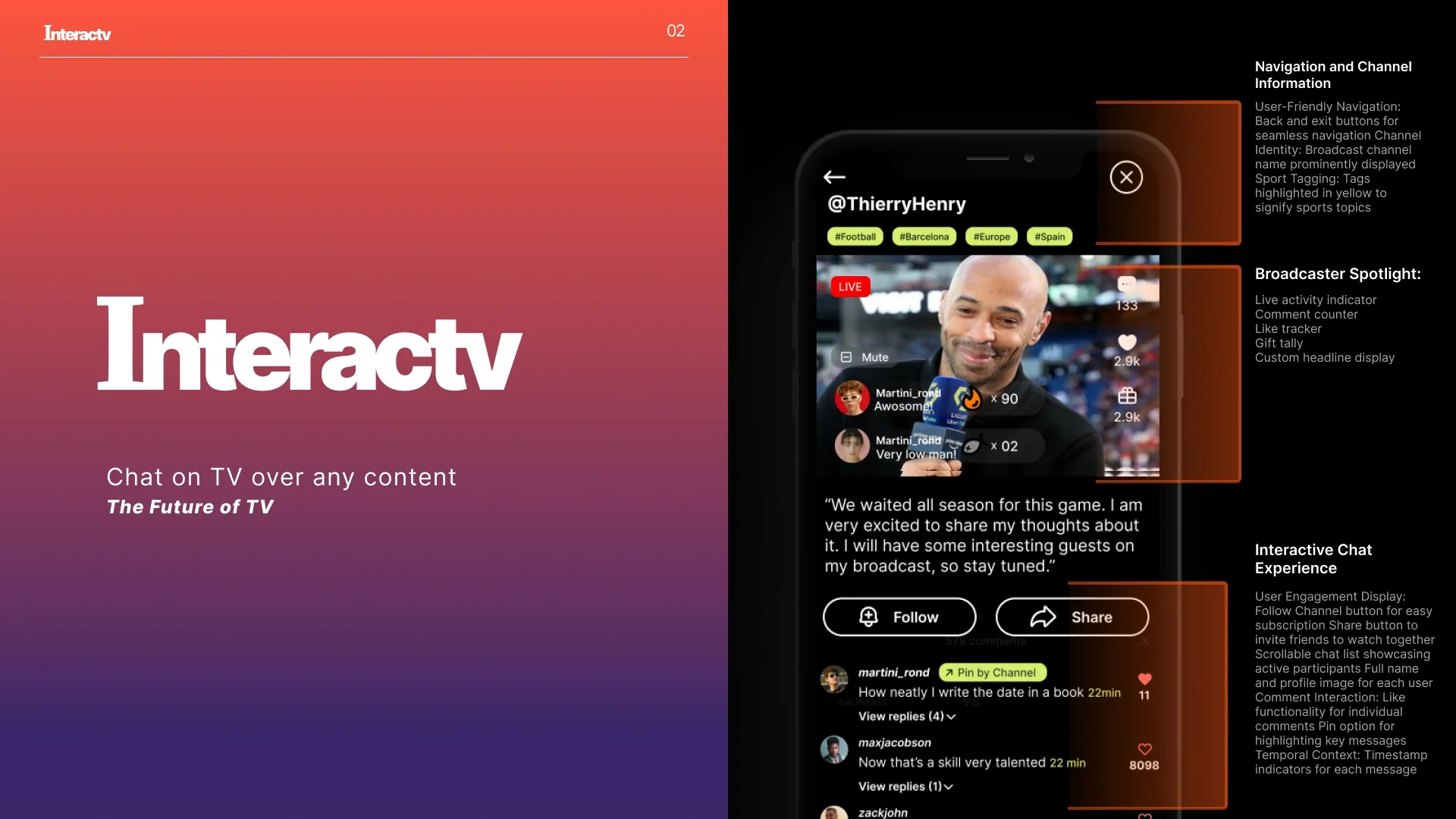
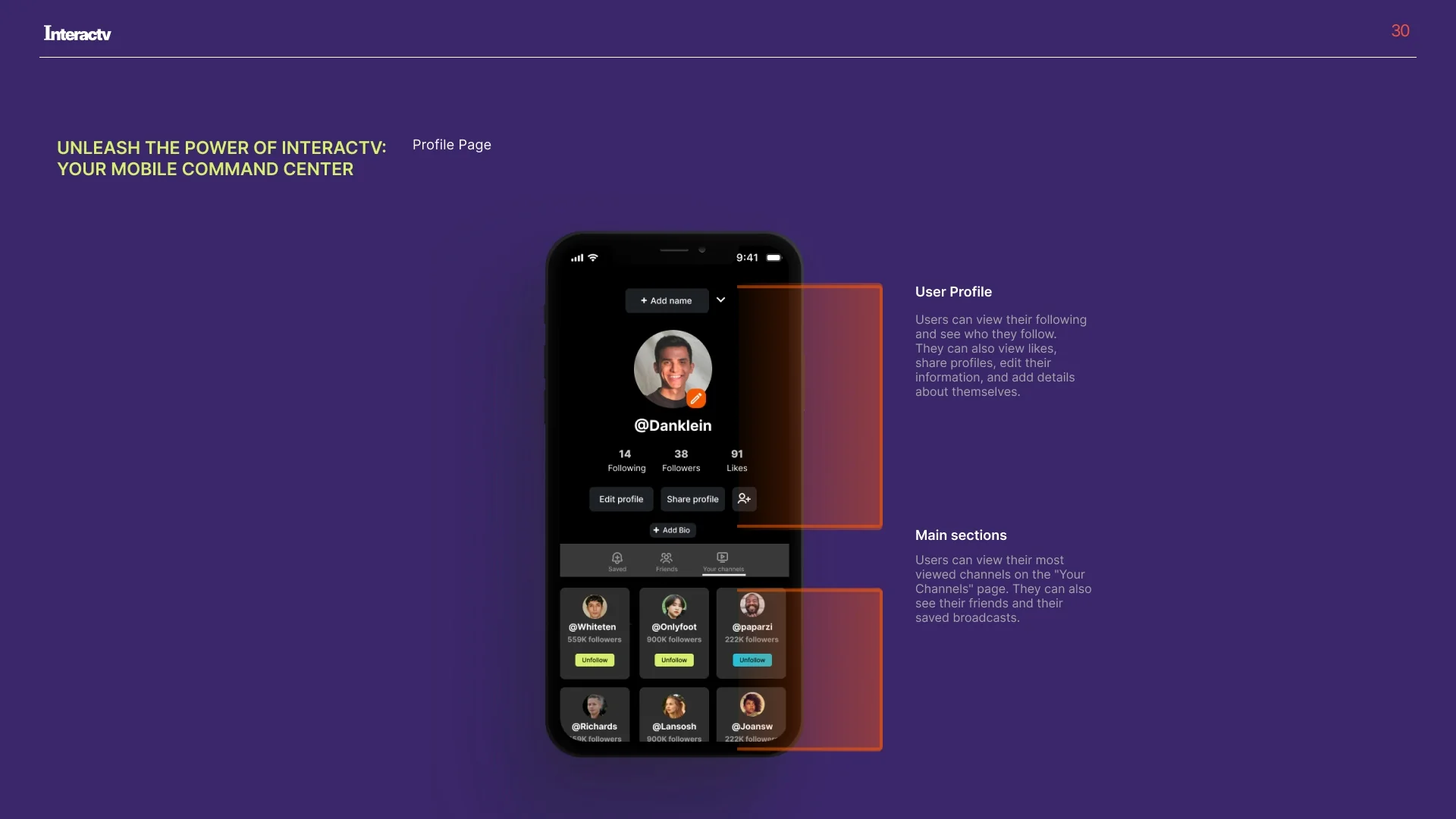
A second screen that adds context instead of stealing attention. The phone experience is intentionally richer: search, channels, chat rooms, creator profiles and discovery live here, where text input and personal controls are natural.
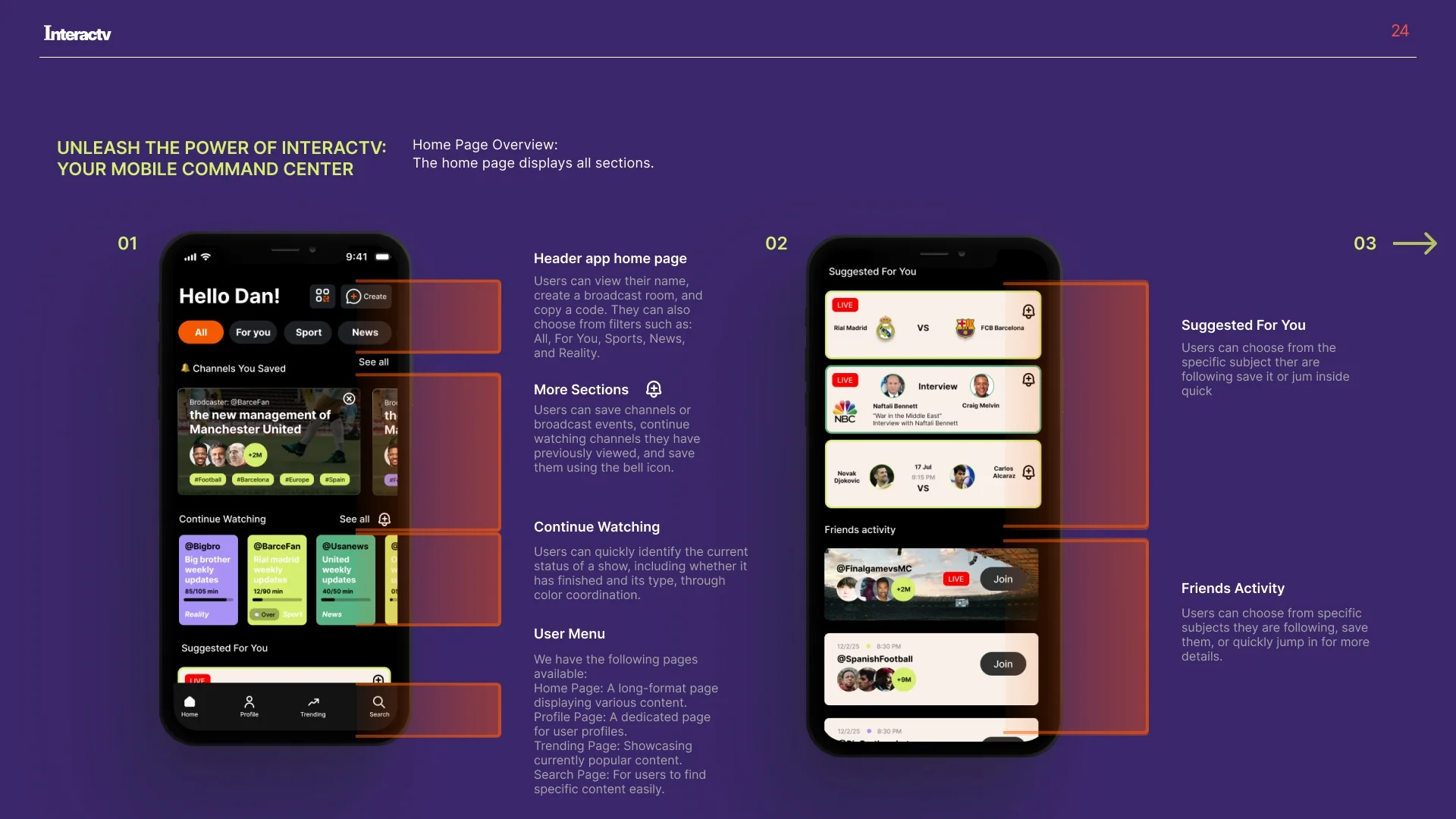
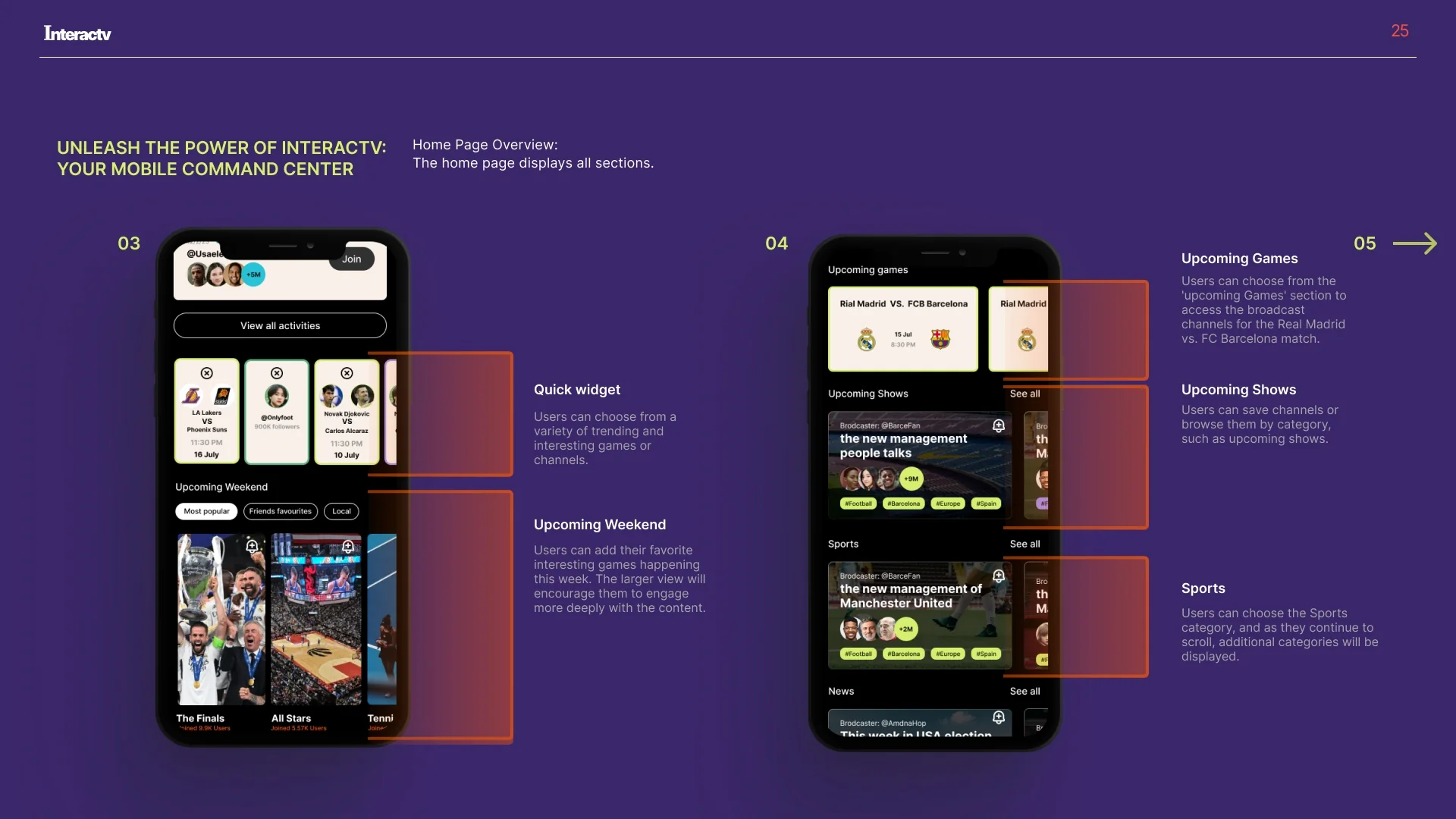
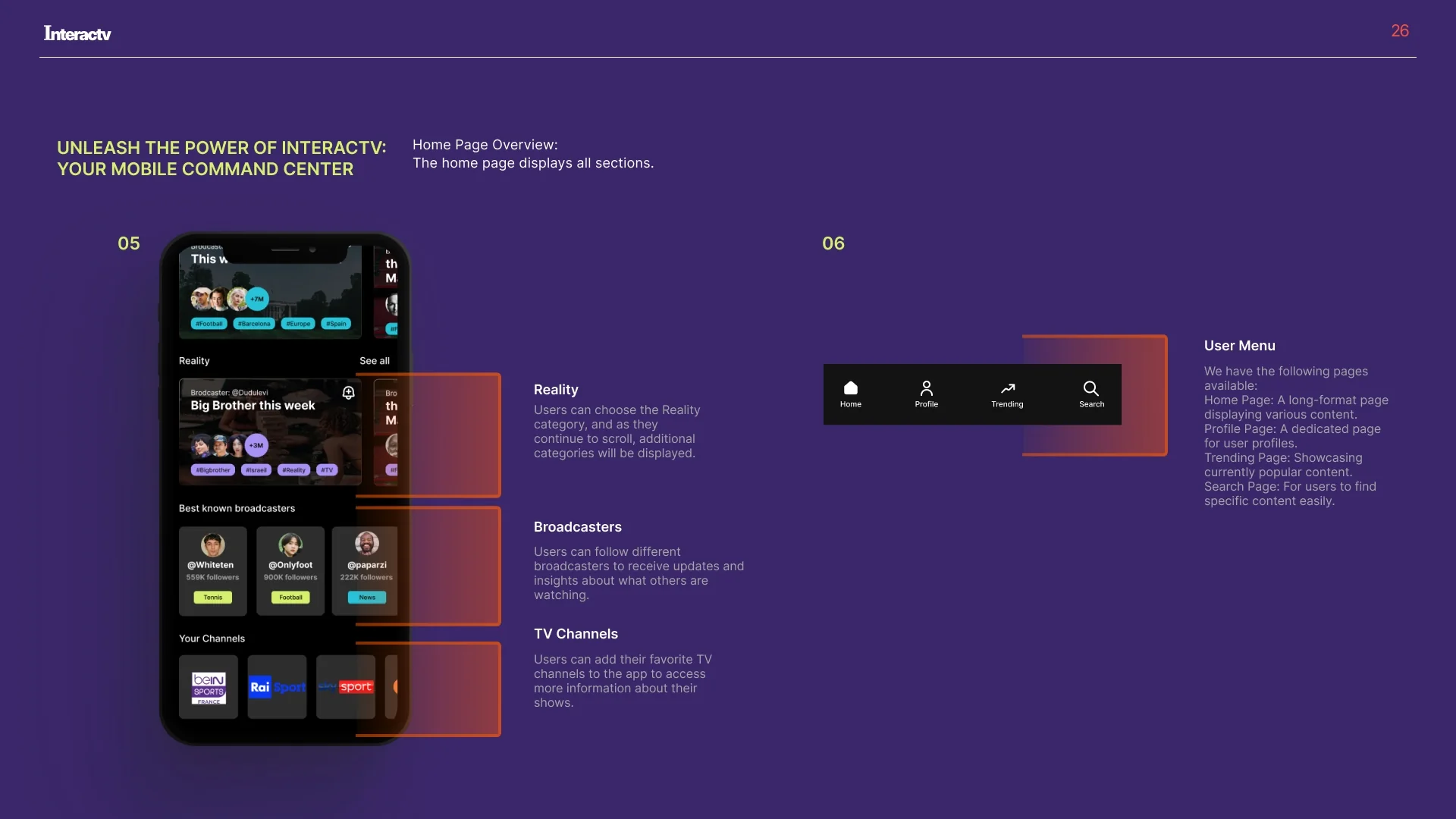
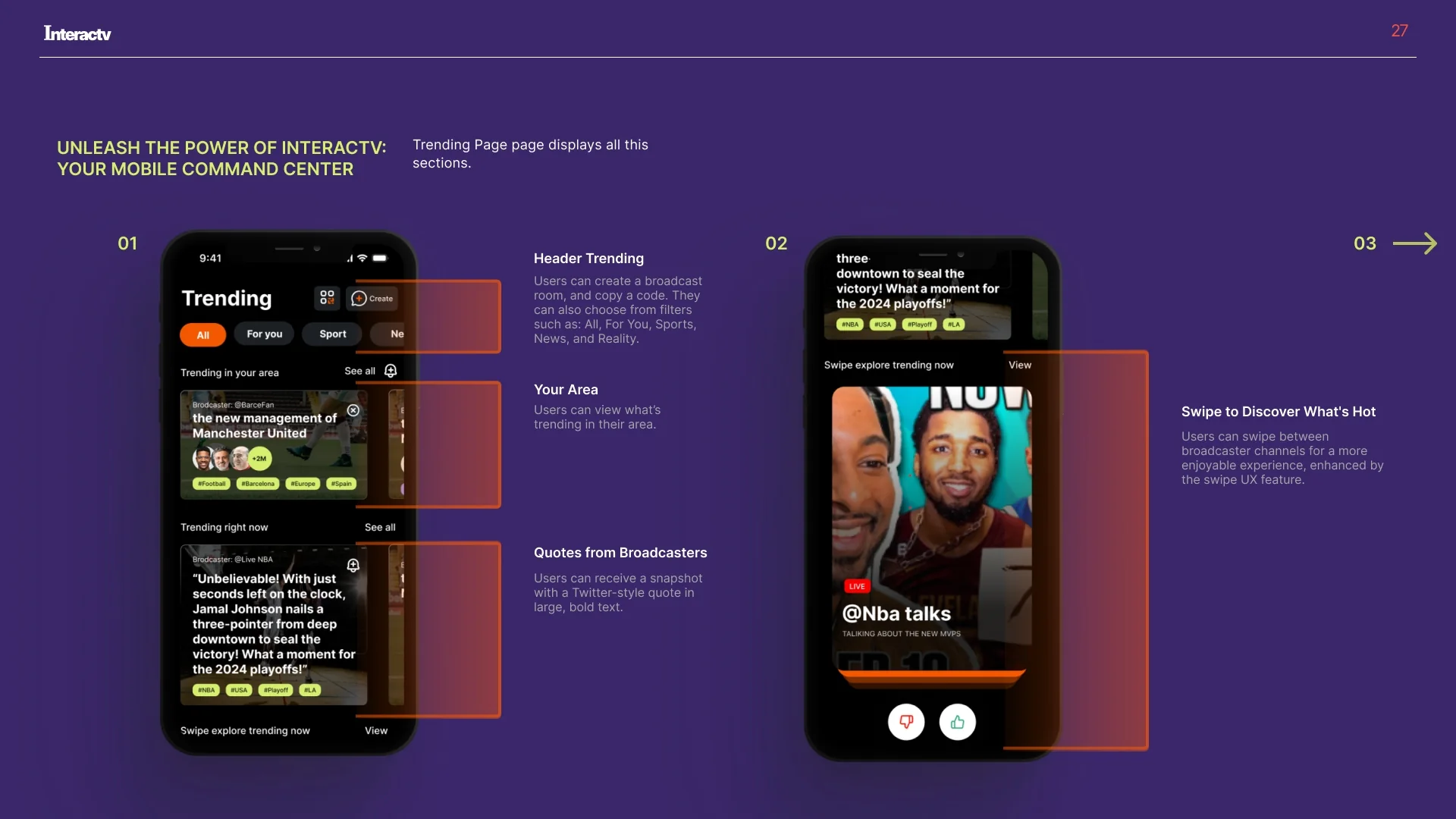
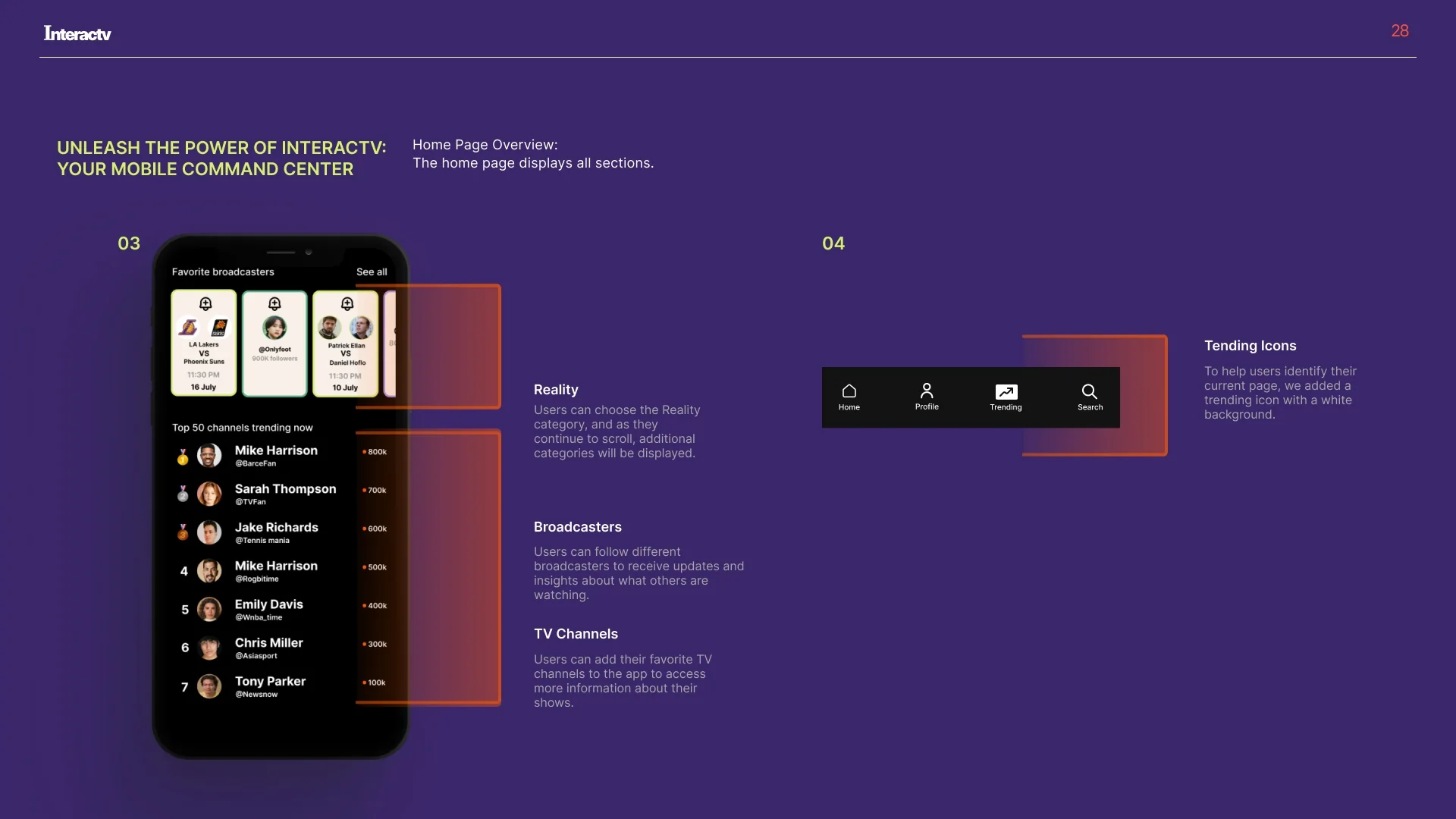
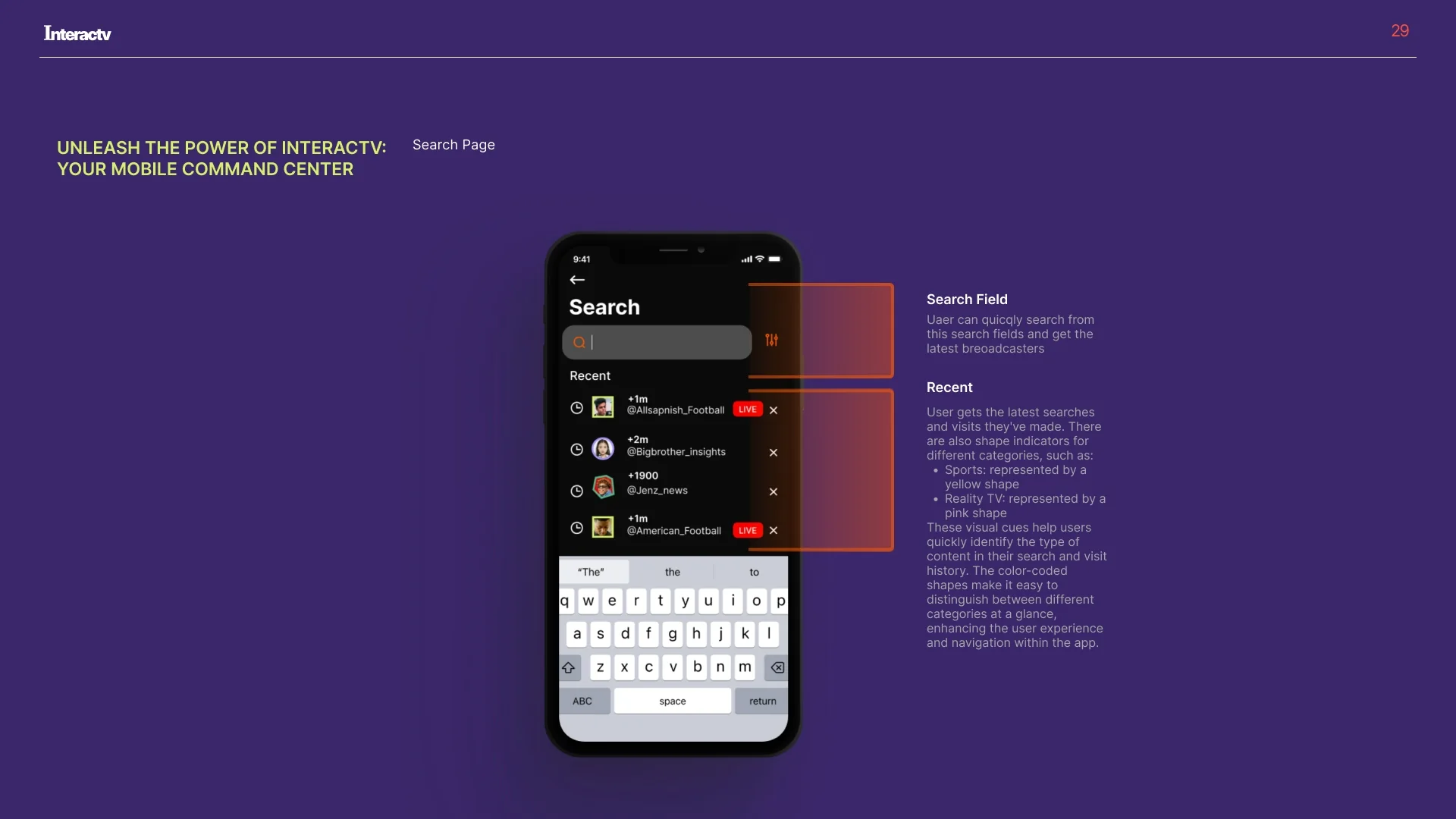
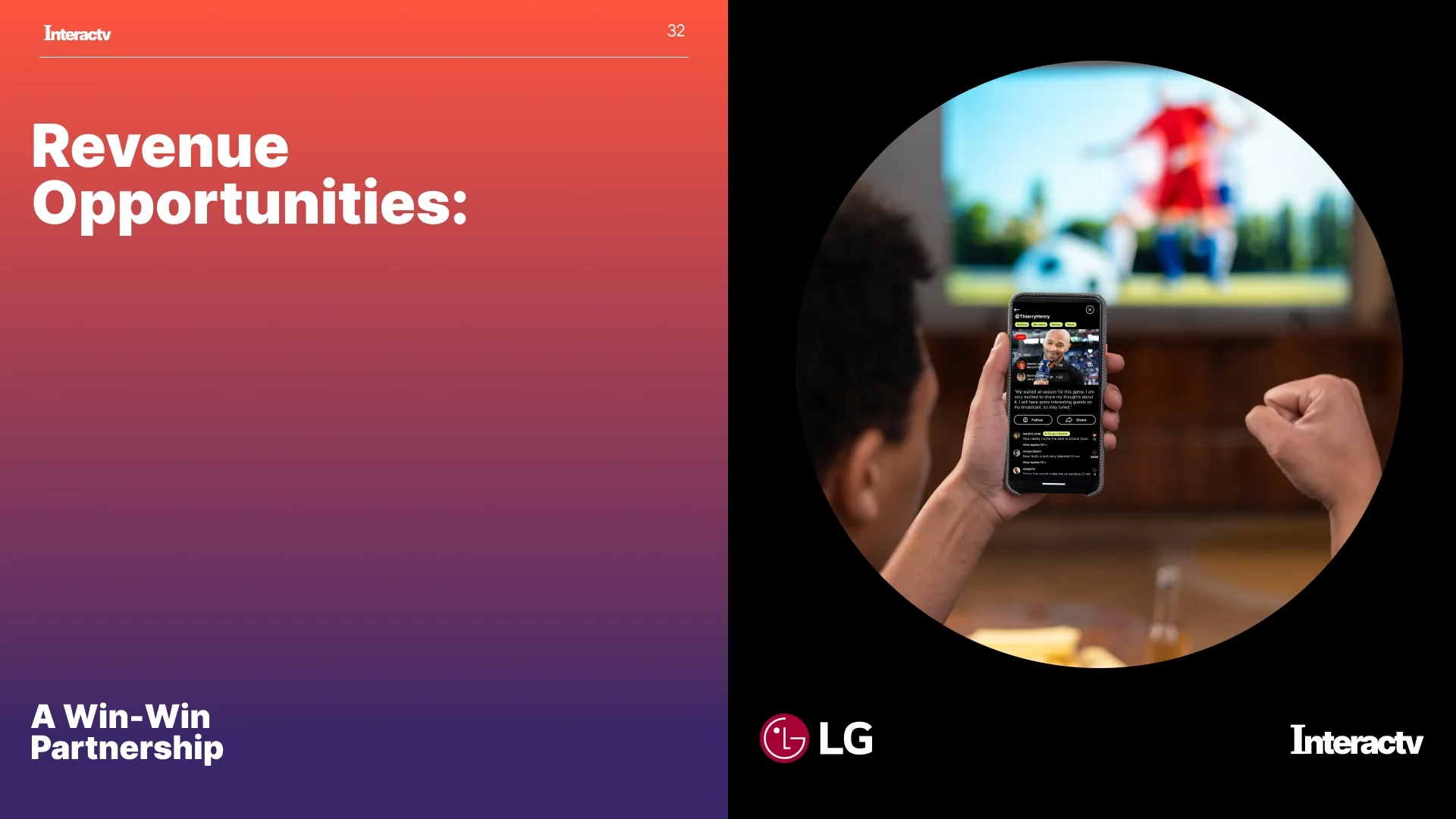
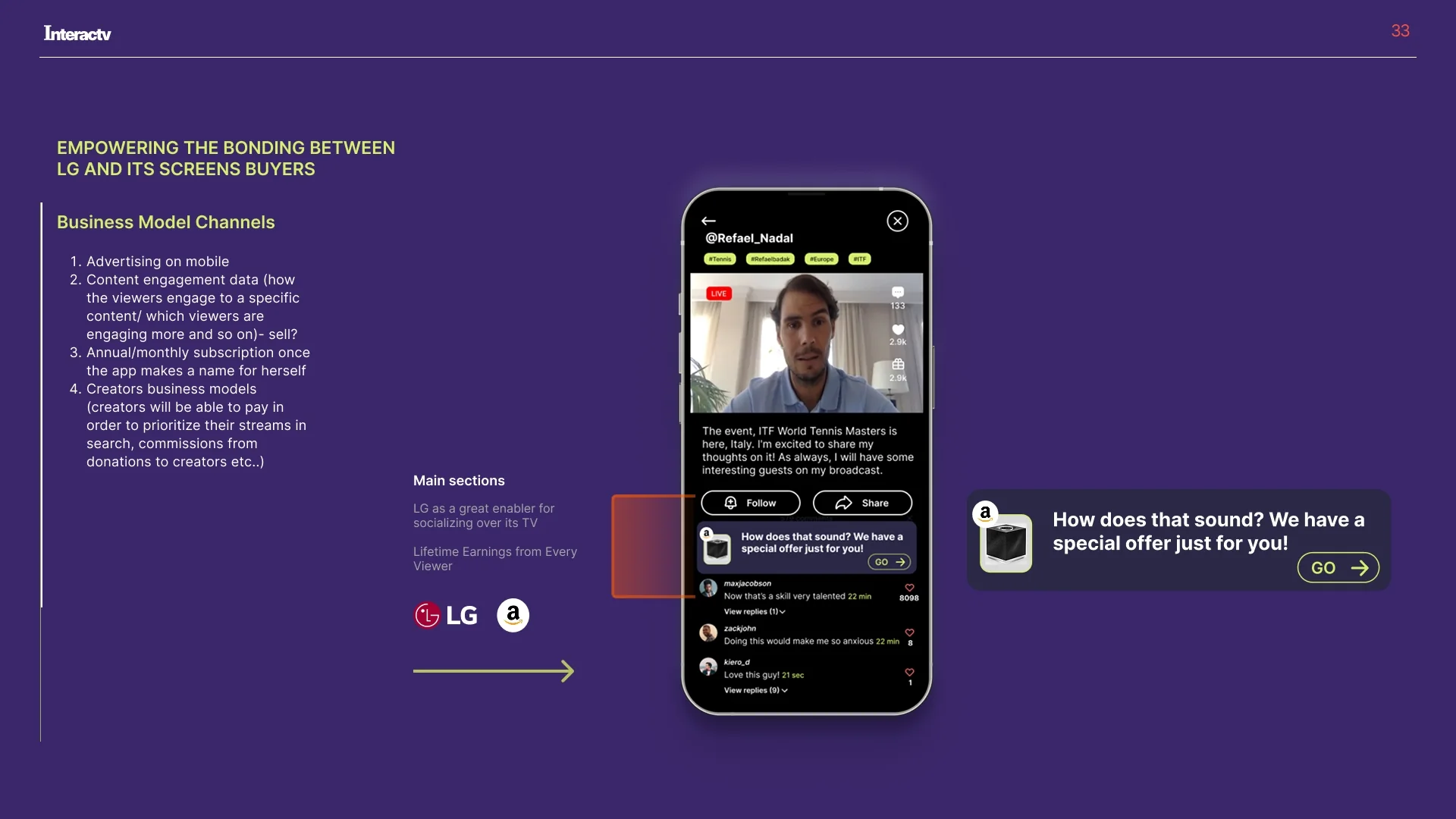
The experience was designed together with the model behind it. Alongside the interface, I mapped the ecosystem around broadcasters, creators, viewers and commercial partners, including discoverability, sponsorship and revenue opportunities.
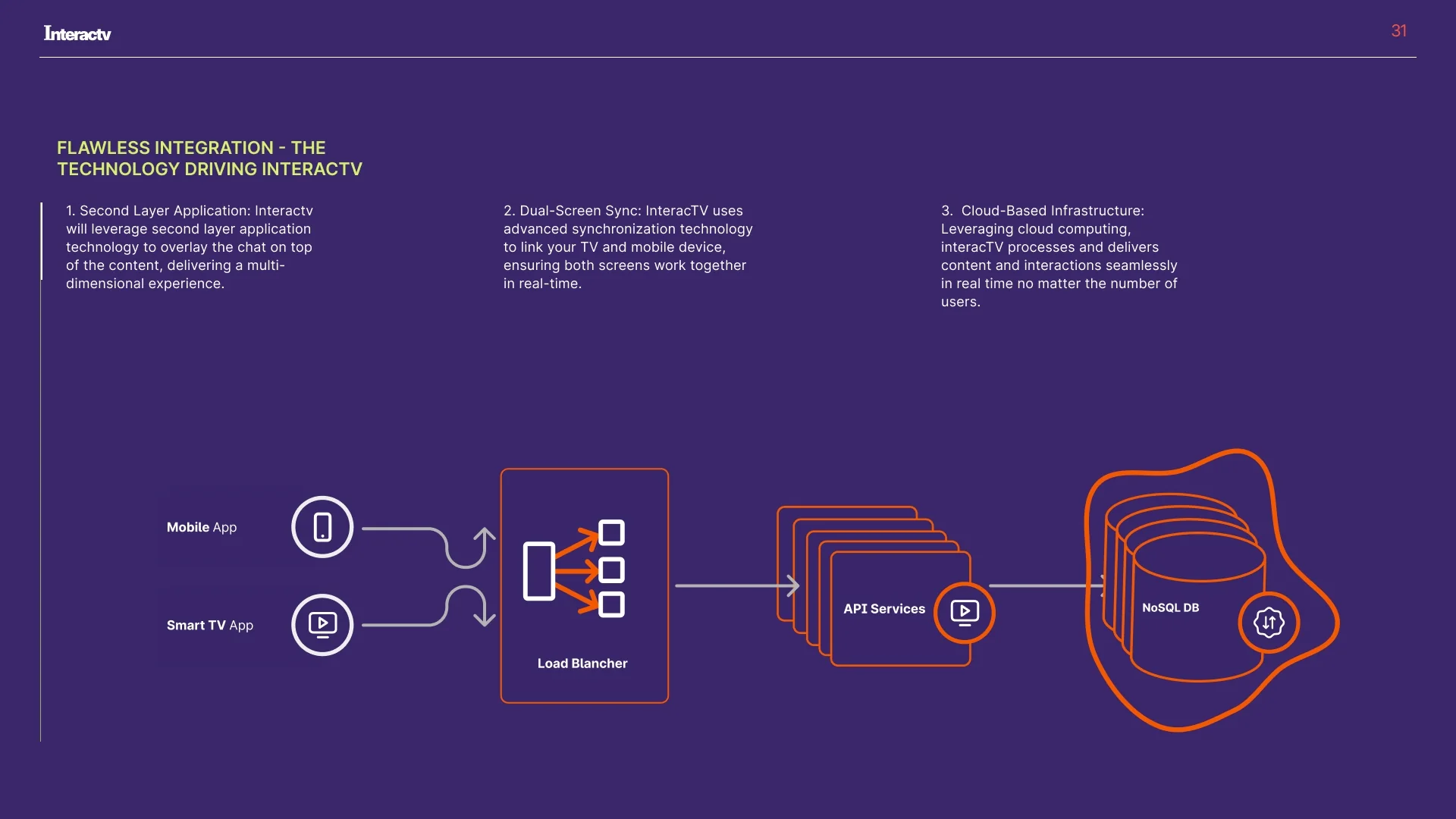
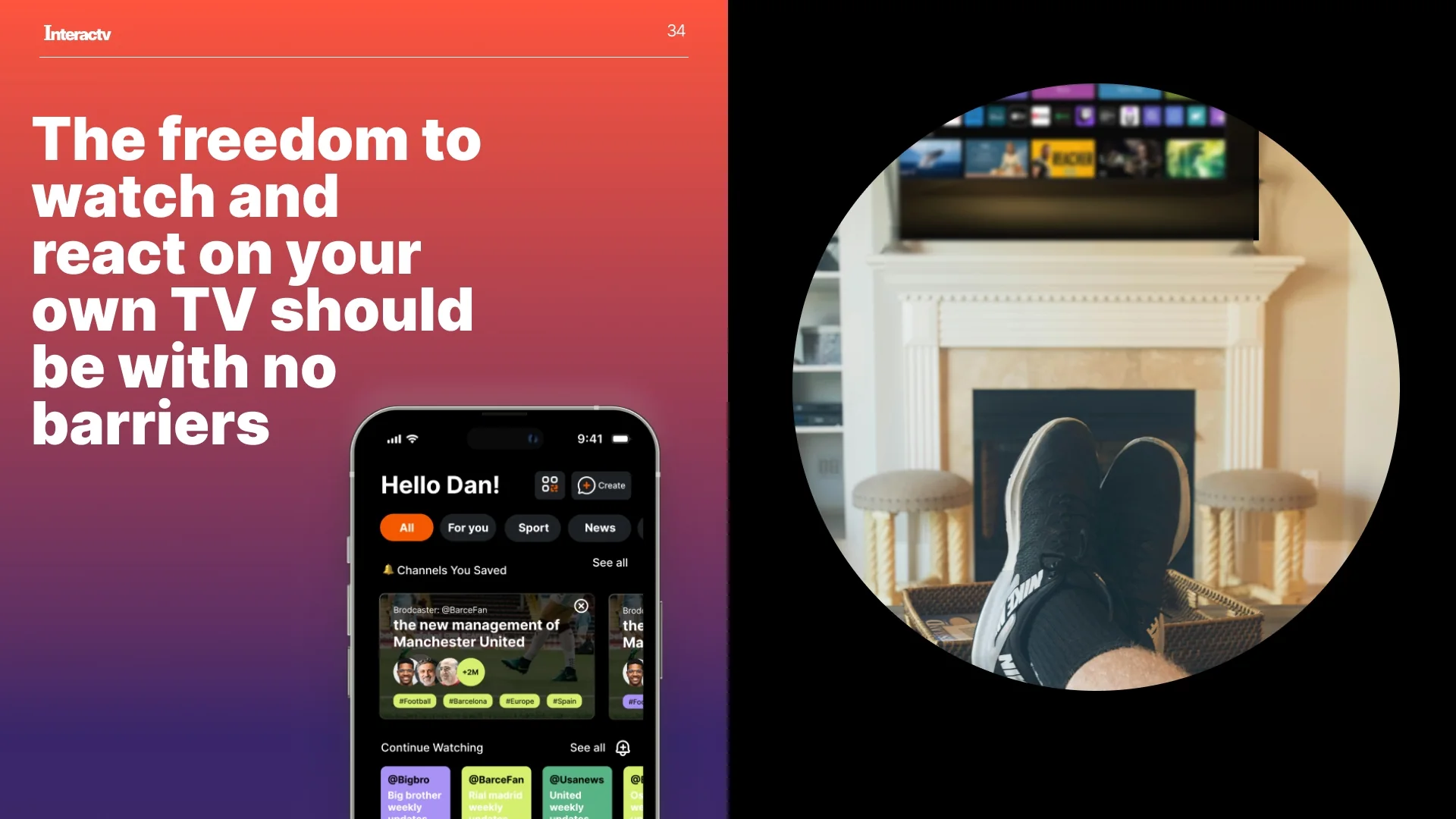
One system, not two separate apps. The final direction treats TV and mobile as complementary surfaces inside the same live experience. The point is not to add more UI to television; it is to make the conversation around television feel native, immediate and connected.